The Wizard: How Nyesom Wike Is Transforming Abuja and Reshaping Nigerian Politics


The Wizard: How Nyesom Wike Is Transforming Abuja and Reshaping Nigerian Politics
By Akin Alade
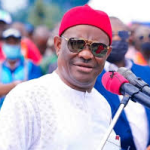
For every transformational leader, history often begins with resistance. Policies that disrupt entrenched interests rarely receive applause from those who benefit from the old order. Instead, they attract criticism, protests and, sometimes, fierce personal attacks. Yet, as the dust settles, the results often speak louder than the controversies. That is the story many supporters believe best describes the Minister of the Federal Capital Territory (FCT), Nyesom Wike.

Since assuming office as FCT Minister in August 2023, Wike has emerged as one of the most influential and controversial figures in Nigeria’s political landscape. Admirers describe him as fearless, decisive and results-driven, while critics accuse him of being uncompromising and politically aggressive. To his supporters, however, those qualities are exactly what Abuja needed after years of abandoned projects, weak enforcement of regulations and slow infrastructure development.

His administration has pursued an aggressive urban renewal agenda that has changed the physical outlook of the nation’s capital. Roads that had remained uncompleted for years have been revived and commissioned. New transport corridors have opened previously neglected communities to economic activities, while bridges, interchanges and public infrastructure have continued to reshape the city.
Beyond the city centre, Wike’s policies have extended development to satellite towns and suburban communities that had long complained of government neglect. Areas once characterised by poor road networks and inadequate public infrastructure are gradually witnessing renewed government attention. For thousands of residents, these projects represent more than concrete and asphalt—they symbolize inclusion, economic opportunity and hope for a better future.
His administration has also maintained a firm stance on enforcing development regulations. The demolition of illegal structures, recovery of public lands and insistence on compliance with planning laws generated intense public debate. Many property owners and developers affected by these exercises viewed the measures as harsh, while others argued they were necessary to restore order to a city where impunity had become commonplace.
Leadership is rarely measured by popularity alone. Sometimes it demands difficult decisions that attract criticism in the short term but produce long-term public benefits. Those who defend Wike’s approach argue that every thriving capital city in the world is built on respect for planning regulations and the courage to enforce them without fear or favour.
Politically, Wike remains one of Nigeria’s most consequential figures. His role in the events that reshaped the country’s political landscape before and after the 2023 general elections continues to generate debate. Many observers believe his political calculations significantly weakened what was once regarded as Africa’s largest political party. His supporters, however, offer a different interpretation. They argue that his actions challenged long-standing political dominance by a few powerful interests and expanded democratic participation by ensuring that no region or political bloc could permanently monopolize power.
To them, Wike represents a politician willing to confront established structures in pursuit of what he believes is fairness, equity and constitutional democracy. Whether one agrees with his methods or not, few dispute his ability to influence national political conversations.
Perhaps that explains why some admirers have given him a fitting nickname: “The Wizard.” Not because of magic, but because of his remarkable ability to alter political equations, revive abandoned projects and achieve outcomes many considered impossible. While critics continue to question his style, supporters point to visible infrastructure, renewed investor confidence and stronger institutional enforcement as evidence that decisive leadership can produce measurable results.
History has often been kinder to reformers than contemporary public opinion. Leaders who insist on accountability and structural reforms are frequently misunderstood while in office, only to be appreciated years later when the benefits become undeniable.
Whether viewed as a political strategist, an administrator or a reformer, Nyesom Wike has become one of the defining public officials of contemporary Nigeria. His tenure in the Federal Capital Territory demonstrates a governance philosophy centred on execution rather than rhetoric. For many residents whose daily lives have been improved through better roads, expanded infrastructure and increased government presence in neglected communities, the visible transformation of Abuja is the strongest argument in his favour.
If the ultimate test of leadership is the ability to leave lasting impact, then Wike’s record in the Federal Capital Territory will continue to shape conversations long after his tenure ends. To his supporters, “The Wizard” is not merely a political nickname—it is a reflection of a leader they believe has combined courage, vision and determination to redefine governance, strengthen democracy and build a more inclusive capital for all Nigerians.