

From Ibadan to Washington: Wally Adeyemo’s Rise as a Global Economic Power Broker


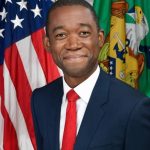 Adewale O. “Wally” Adeyemo’s journey from Ibadan, Nigeria, to the upper echelons of American economic policy is a compelling story of ambition, intellect, and global influence. Born on May 20, 1981, to Yoruba parents, Adeyemo’s early life was shaped by strong family values—his father worked as a teacher while his mother served as a nurse.
Though he was born in Nigeria, he was raised in Southern California, where his upbringing bridged two worlds and laid the foundation for a career that would later span continents.
From an early age, Adeyemo demonstrated a keen interest in leadership and public service. After graduating from Eisenhower High School in Rialto, California, he went on to attend the University of California, Berkeley, where he earned his Bachelor of Arts degree in 2004. His academic journey did not stop there; he proceeded to the prestigious Yale Law School, obtaining his Juris Doctor in 2009—a credential that would open doors to influential roles in law, policy, and governance.
Adeyemo’s career began in the political arena, where he worked as Director of African American Outreach for the John Kerry presidential campaign in 2004. This early exposure to national politics marked the beginning of a steady rise through the ranks of American public service. Before long, he became an editor at the Hamilton Project and later served as a senior advisor and Deputy Chief of Staff to Jack Lew at the U.S. Department of the Treasury.

His expertise in economic policy and international affairs quickly distinguished him. Adeyemo played a significant role as a negotiator in the Trans-Pacific Partnership and became the first Chief of Staff at the Consumer Financial Protection Bureau under Elizabeth Warren. His ability to navigate complex policy environments earned him recognition as a rising figure in economic leadership.


During the Obama administration, Adeyemo’s influence expanded further. Though his initial nomination as Assistant Secretary of the Treasury for International Markets did not move forward, he was soon appointed to critical roles as Deputy National Security Advisor for International Economics and Deputy Director of the National Economic Council. In these positions, he represented the United States at major global forums such as the G7 and G20 summits, helping to shape international economic policy and strengthen global partnerships.
After his tenure in government, Adeyemo transitioned into the private sector, joining BlackRock in 2017 as a Senior Advisor. He also served as interim Chief of Staff to the company’s CEO, Laurence D. Fink. His leadership abilities and experience in both public and private sectors made him a natural choice for his next major role.
In 2019, Adeyemo made history again when he was appointed the first President of the Obama Foundation, an organization dedicated to empowering leaders around the world. His work there reflected his commitment to fostering leadership, civic engagement, and social impact on a global scale.
With the change in administration in 2021, Adeyemo reached another milestone in his career. Nominated by President Joe Biden, he was confirmed as the United States Deputy Secretary of the Treasury, making him one of the highest-ranking officials in the U.S. economic system. Sworn in on March 26, 2021, by Treasury Secretary Janet Yellen, he assumed a critical role in shaping and enforcing U.S. financial policies.
In his current position, Adeyemo has been instrumental in global economic strategy, particularly in the enforcement of sanctions following Russia’s 2022 invasion of Ukraine. Working closely with international partners, he has advocated for coordinated economic measures aimed at maintaining global stability. His thought leadership extends beyond policy meetings; in 2024, he authored a Financial Times article emphasizing the importance of sustained economic pressure in global conflict resolution.
Adeyemo’s story is one of remarkable achievement—a bridge between Nigeria and the United States, between local roots and global leadership. From his early beginnings in Ibadan to his influential role in shaping international economic policy, he stands as a testament to the power of education, determination, and service.


