



Ughelli NDC March: Property Sealing Triggers Political Controversy in Delta
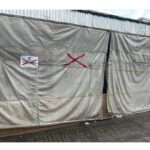
The sealing of a property belonging to the organiser of a major National Democratic Congress (NDC) march in Ughelli, Delta State, has triggered a political controversy, with the property owner alleging victimisation while the local government chairman insists the action was based on regulatory violations.


The affected property belongs to Ambassador Tobore Alex Agbah, organiser of the reported 10,000-man NDC awareness march held in Ughelli. Agbah alleged that the Ughelli North Local Government Council moved against his property shortly after the political mobilisation, suggesting that his opposition activities were responsible for the action.
The development has attracted attention because of its timing. The property was reportedly sealed a day after the march, which was organised to sensitise residents and mobilise support for the NDC and its candidates. Agbah described the mobilisation as a significant grassroots gathering.
However, Ughelli North Local Government Chairman, Olorogun Jaro Egbo, rejected the allegation that the NDC march triggered the enforcement action. He said the property was allegedly constructed under a high-tension electricity line and that officials had previously written to the owner over environmental and regulatory concerns.
Egbo said the council had carried out more than 30 enforcement actions since he assumed office involving structures allegedly obstructing waterways or built under high-tension lines. He maintained that political affiliation would not exempt any property owner from complying with applicable regulations.
The council chairman also raised a separate issue involving a branded vehicle associated with the political mobilisation. According to him, the vehicle was used for mobile advertising without payment of the prescribed advertising fee, adding that relevant regulations would be enforced.
The controversy has consequently shifted attention from the NDC march itself to the broader question of how local government regulatory powers should be exercised during periods of heightened political activity. While Agbah has called for intervention, the council maintains that its action is an enforcement matter rather than a political response.
The NDC has also criticised the development, describing the sealing of Agbah’s office as an attempt to punish an opposition organiser for exercising what the party considers his rights to political participation and peaceful assembly.
The dispute comes as political activities intensify ahead of the 2027 general elections, with parties increasingly expanding their grassroots mobilisation structures across Delta State and other parts of the country. The development in Ughelli therefore has implications beyond the individual property dispute.
For political stakeholders, the immediate priority should be ensuring that disagreements over regulatory compliance do not escalate into a wider confrontation between opposition groups and local authorities. Clear documentation, transparent enforcement procedures and access to appropriate review mechanisms could help resolve the dispute without deepening political tensions.
The Ughelli controversy also underscores the importance of separating legitimate regulatory enforcement from political disagreements. While local authorities have a responsibility to enforce building, environmental and advertising regulations, political actors and opposition groups equally require an environment in which lawful political activities can take place without intimidation.
As both sides maintain contrasting accounts of what led to the sealing, the facts surrounding the property’s approvals, previous notices and alleged regulatory breaches will be central to determining the next stage of the dispute.


