

2027: Obidients’ Hostility Could Hurt Igbo Presidency Chances — Sowunmi


2027: Obidients’ Hostility Could Hurt Igbo Presidency Chances — Sowunmi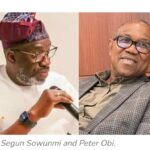
By Akin Alade


The aspiration for a Nigerian president of Igbo extraction could face further political setbacks if supporters of former Anambra State Governor Peter Obi continue to adopt confrontational attitudes towards perceived political opponents, according to prominent political commentator and former Peoples Democratic Party (PDP) governorship aspirant, Otunba Segun Sowunmi.
Sowunmi’s position has reopened debate over whether the political activities, public reactions and communication strategies of some supporters of the Labour Party’s 2023 presidential candidate are strengthening or weakening the long-standing agitation for an Igbo president.
The political figure identified Obi and his supporters, popularly known as Obidients, as major obstacles to the realisation of an Igbo presidency, suggesting that their approach to political engagement could alienate potential allies whose support would be necessary to win a presidential election.
His argument raises a fundamental question about Nigeria’s political landscape: can any presidential candidate emerge victorious through regional enthusiasm and social media mobilisation without building enduring relationships across the country’s diverse ethnic, religious and political communities?
Political observers have consistently maintained that Nigeria’s presidential contest requires broad national acceptance, strategic alliances and electoral support across multiple geopolitical zones. Under the country’s constitutional requirements, winning the presidency involves not only securing the highest number of votes but also meeting the prescribed geographical spread of votes.
Against this background, Sowunmi’s criticism suggests that political intolerance, personal attacks and the tendency of some supporters to dismiss opposing opinions could discourage potential partners and weaken efforts to build a formidable national coalition behind an Igbo presidential candidate.
The controversy also highlights the distinction between Peter Obi’s personal political ambition and the wider aspiration for a president of Igbo extraction. While Obi remains an influential opposition figure, the prospect of an Igbo presidency extends beyond one politician, political movement or election cycle.
For supporters of the Igbo presidency project, Sowunmi’s intervention presents an opportunity to reassess political engagement strategies, particularly the importance of constructive dialogue, coalition-building and mutual respect among Nigeria’s different political constituencies.
However, criticism of the Obidient movement should not be interpreted as evidence that all Obi supporters engage in hostile political conduct. The movement includes Nigerians from different ethnic and religious backgrounds, many of whom regard their support for Obi as an expression of their desire for accountable governance and political reform.
As political alignments ahead of the 2027 general elections continue to evolve, Sowunmi’s warning reinforces the argument that achieving an Igbo presidency may depend as much on the ability to build trust and cultivate political friendships nationwide as on the popularity of any individual candidate.
Ultimately, the challenge facing advocates of an Igbo presidency is to transform political enthusiasm into a broad-based national movement capable of attracting support beyond traditional strongholds. Whether the Obidient movement becomes an asset or an obstacle to that ambition will depend partly on how its members engage with critics, potential allies and the wider Nigerian electorate.


