

2027 Osun Governorship Race Intensifies as Political Heavyweights Battle for Government House


2027 Osun Governorship Race Intensifies as Political Heavyweights Battle for Government House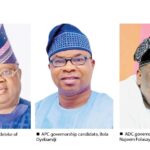
The race for the Osun State Government House has entered a decisive phase, with political parties, candidates and key stakeholders intensifying campaigns ahead of the governorship election. The contest is widely regarded as one of Nigeria’s most significant off-cycle elections, not only because it will determine the next governor of Osun State but also because it is expected to shape political calculations ahead of the 2027 general elections.

With more than 2.3 million registered voters expected to participate in the election, the battle has evolved into a fierce contest of political structures, grassroots mobilisation, governance records and public perception. Campaign activities have spread across the state’s three senatorial districts, with candidates traversing local government areas to market their manifestoes and win the confidence of voters.

Governor Ademola Adeleke, contesting on the platform of the Accord Party following political realignments, is seeking another term in office. His campaign is anchored on continuity, infrastructure development, social welfare programmes, education reforms and healthcare delivery. His supporters argue that his administration has delivered people-oriented projects and deserves another opportunity to consolidate on its achievements.
However, the governor’s re-election bid has not been without criticism. Opposition parties have questioned some policy decisions, including employment issues, allegations of nepotism and other governance concerns, insisting that the state requires a fresh direction. These criticisms have become central talking points throughout the campaign season.
The All Progressives Congress (APC), determined to reclaim Osun State, has mounted an aggressive statewide campaign. Party leaders have described the election as a strategic rehearsal for the 2027 general election, deploying national leaders, governors, lawmakers and grassroots mobilisers to strengthen support across the state. The APC believes victory in Osun would provide significant political momentum ahead of the nationwide polls.
Other political parties are also making efforts to expand their influence by presenting alternative policy agendas focused on job creation, youth empowerment, agricultural development, industrialisation, security, healthcare and education. Although the election appears dominated by the major contenders, smaller parties remain optimistic that voter dissatisfaction with traditional political alignments could create opportunities for electoral surprises.
Beyond campaign promises, security has emerged as one of the defining issues of the election. Reports of politically motivated violence, clashes between supporters, arrests and growing tension have raised concerns among residents, civil society organisations and election observers. The Independent National Electoral Commission (INEC), security agencies and the National Peace Committee have repeatedly appealed to political actors to conduct issue-based campaigns and avoid violence capable of undermining the credibility of the election.
Traditional rulers, religious leaders and civil society organisations have also intensified peace advocacy, urging politicians to place the interests of the people above partisan rivalry. They have emphasised that a peaceful election will not only strengthen democracy in Osun State but also boost public confidence in Nigeria’s electoral process ahead of the 2027 general elections.
Political analysts believe the outcome of the Osun governorship election will resonate beyond the state’s borders. It is expected to influence party strategies, coalition building, voter behaviour and campaign messaging ahead of the 2027 presidential election. For the ruling and opposition parties alike, Osun represents more than a governorship contest—it is a major test of political strength, organisational capacity and grassroots acceptance.
As election day approaches, the spotlight remains firmly on Osun. Voters will ultimately determine whether the incumbent administration secures another mandate or whether the opposition succeeds in reshaping the state’s political landscape. Whatever the outcome, the election is expected to leave a lasting imprint on Nigeria’s evolving democratic journey.


