



State Police: 30 States Approve Amendment, Akpabio Reveals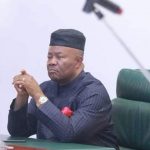
By Akin Alade


Nigeria may be on the verge of a historic transformation of its security architecture as Senate President Godswill Akpabio has disclosed that 30 out of the country’s 36 State Houses of Assembly have endorsed the constitutional amendment seeking to establish state police.
The development represents a significant breakthrough in the long-standing campaign for decentralised policing, raising fresh expectations that state governments could soon acquire constitutional powers to establish their own police services and respond more effectively to security threats within their territories.
Akpabio made the disclosure on Wednesday, October 28, 2026, while receiving members of the Arewa Revival Project, a northern youth organisation drawn from the 19 northern states, at his office in Abuja.
The Senate President expressed optimism that the proposed state police system could become a reality within weeks, describing the growing support among state legislatures as an important milestone in efforts to strengthen Nigeria’s security institutions.
According to him, the endorsement by approximately 30 states has moved the country closer to replacing its exclusively centralised policing arrangement with a dual structure that would allow federal and state police services to operate within clearly defined constitutional responsibilities.
The development is particularly significant because the 1999 Constitution requires the approval of at least two-thirds of the 36 State Houses of Assembly for the relevant constitutional amendment. With 30 states reportedly supporting the proposal, the required threshold of 24 states has been exceeded.
However, the endorsements do not automatically establish state police. The constitutional amendment must complete the remaining legislative procedures and receive presidential assent, while the proposed National Policing Bill must also pass through the necessary lawmaking process.
Under the proposed arrangement, the Federal Police Service would retain responsibility for national security matters, including terrorism, interstate criminal activities, border security and other offences requiring federal intervention.
State police services, on the other hand, would concentrate on local law enforcement, protection of lives and property, community intelligence gathering, maintenance of public order and the investigation of crimes within their jurisdictions.
Supporters of the reform believe that allowing states to establish police services would improve response times, strengthen intelligence gathering and reduce the operational difficulties associated with managing security challenges across Nigeria’s vast geographical territory from a central command.
The proposed reform comes amid persistent concerns over kidnapping, banditry, terrorism, armed robbery, communal violence and other criminal activities that have continued to threaten lives, businesses and economic development in different parts of the country.
For many communities, particularly in rural areas, the establishment of state police could provide opportunities for recruiting officers familiar with local languages, geographical conditions and community security challenges.
Meanwhile, the Presidency has intensified preparations for the implementation of the proposed policing arrangement through the Presidential Working Group on the National Policing Bill, chaired by the Chief of Staff to the President, Femi Gbajabiamila.
The working group has completed the drafting of the proposed National Policing Bill alongside 29 consequential amendment bills, which were submitted to the Federal Ministry of Justice on October 19, 2026, for legislative review and validation.
The documents are expected to undergo further consideration before being presented to President Bola Ahmed Tinubu for onward transmission to the National Assembly.
Beyond the constitutional and legislative processes, the Federal Government has also acknowledged that funding will be critical to the successful implementation of state police.
Gbajabiamila recently called on the organised private sector to develop sustainable financing proposals, stressing that state governments must demonstrate the capacity to pay officers, provide training, procure equipment and maintain effective security operations.
He also emphasised that private sector participation must not compromise the independence of police institutions or create opportunities for undue influence over criminal investigations.
Despite growing support for state police, concerns remain over the possibility of political interference, particularly the fear that some governors could deploy state-controlled security agencies against political opponents, journalists, civil society organisations and other perceived critics.
Legal experts and security stakeholders have therefore continued to advocate strong constitutional safeguards, independent oversight mechanisms, professional recruitment standards and effective disciplinary procedures to prevent abuse of police powers.
The proposed framework is expected to address these concerns by defining the responsibilities of federal and state police institutions while establishing accountability arrangements for their operations.
During his meeting with the Arewa Revival Project, Akpabio also urged northern youths to support President Tinubu’s re-election ambition in 2027, arguing that continuity in government would allow ongoing economic and security reforms to produce sustainable results.
He maintained that the administration had undertaken significant reforms aimed at addressing structural economic challenges, diversifying national revenue and improving the country’s long-term development prospects.
The Senate President further encouraged young Nigerians to reject what he described as politically motivated misinformation and support initiatives capable of strengthening national unity and security.
Nevertheless, the growing momentum behind state police has shifted national attention from whether Nigeria should decentralise policing to how the proposed system can be implemented without undermining civil liberties, democratic accountability and national security coordination.
For state governments, the reform could introduce new responsibilities involving recruitment, personnel management, funding, operational infrastructure and the establishment of credible oversight institutions.
For ordinary Nigerians, however, the ultimate measure of success will not be the number of states endorsing the constitutional amendment but whether the new policing arrangement can reduce insecurity, protect communities and restore public confidence in law enforcement.
As the constitutional amendment advances towards its final stages, the coming weeks could prove decisive in determining whether Nigeria will formally embrace one of the most consequential security reforms since the return to democratic governance in 1999.


