

Ondo Air Crash: Pilot’s Final Manoeuvre May Have Prevented Bigger Tragedy, Aiyedatiwa Says


Ondo Air Crash: Pilot’s Final Manoeuvre May Have Prevented Bigger Tragedy, Aiyedatiwa Says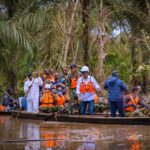
The tragedy surrounding the Ondo air crash may have been even more devastating if the Nigerian Air Force aircraft had come down directly inside Igbokoda community, with Governor Lucky Aiyedatiwa saying eyewitness accounts suggest the pilot manoeuvred the aircraft away from the populated area before it crashed into a difficult swamp terrain.

Aiyedatiwa made the disclosure after visiting the crash site in Igbokoda, Ilaje Local Government Area, where recovery teams were battling thick mangroves, murky water and deep mud in their efforts to locate the main wreckage of the Nigerian Air Force ATR-42 aircraft. The governor said the aircraft appeared to be heading towards the community before changing direction and crashing about 200 metres away.

According to the governor, residents reported hearing a disturbing sound from the aircraft shortly before the crash, which suggested that the aircraft could have been experiencing a serious problem. He, however, stressed that only the pilot would have been in a position to explain what happened inside the cockpit and the circumstances surrounding the final manoeuvre.
The reported diversion away from the community has added another dimension to the tragedy, as a crash in a densely populated section of Igbokoda could potentially have resulted in significantly greater casualties on the ground. The circumstances of the manoeuvre, however, remain subject to the formal investigation into the accident.
Meanwhile, the search and recovery operation has entered another phase, with the main body of the aircraft still believed to be submerged beneath the swamp. Divers, Nigerian Navy personnel, Air Force teams, emergency officials and local residents have continued combing the difficult terrain for the wreckage, victims and crucial evidence.
To improve access to the crash location, Aiyedatiwa directed the deployment of two amphibious machines, popularly known as swamp buggies. The equipment is being used to open access through the waterways, move larger boats closer to the site and assist efforts to excavate sections of the swamp where the aircraft may have become deeply buried.
The recovery effort is particularly challenging because of the swamp’s depth and terrain. The governor said the main wreckage, including the cockpit and black boxes, had not been located, while aviation fuel was reportedly still flowing into surrounding water, raising an additional environmental concern at the site.
Beyond the immediate recovery operation, the crash has triggered renewed attention to aviation safety and coordination between Nigeria’s civil and military aviation authorities. Aviation Minister Festus Keyamo and Chief of Air Staff Air Marshal Sunday Aneke have agreed to strengthen cooperation between the Nigerian Civil Aviation Authority and the Nigerian Air Force in areas including airworthiness, certification, training and safety.
The new cooperation framework could become one of the important outcomes of the tragedy, particularly as both civilian and military aviation authorities seek to strengthen safety standards and share technical expertise. Keyamo and Aneke agreed that closer collaboration was necessary because aviation accidents can affect both military personnel and civilians regardless of whether an aircraft is operated by a military or civilian institution.
As recovery teams continue their difficult work in Igbokoda, attention remains focused on locating the aircraft’s main wreckage and retrieving evidence that could help investigators establish what caused the crash. Until the investigation is concluded, claims about mechanical failure, pilot actions or other possible causes remain preliminary, while the nation mourns those who lost their lives in the tragedy.


