2027: Can Atiku Defeat Tinubu? Why the President’s Performance May Shape Nigeria’s Next Electoral Battle


2027: Can Atiku Defeat Tinubu? Why the President’s Performance May Shape Nigeria’s Next Electoral Battle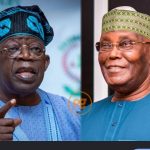
By Akin Alade
As political activities gradually gather momentum ahead of the 2027 general elections, one question continues to dominate conversations across Nigeria’s political landscape: Can former Vice President Atiku Abubakar defeat President Bola Ahmed Tinubu?
The answer may ultimately depend not on political rhetoric, coalition building, or social media campaigns, but on the perception of Nigerians regarding the performance of the Tinubu administration between 2023 and 2027.

History has shown that incumbency alone does not guarantee victory. However, history has also demonstrated that leaders who can point to visible achievements, infrastructure development, economic reforms, and institutional strengthening often enter elections with significant advantages.


For President Tinubu, supporters believe his strongest campaign tool for 2027 may not be political speeches but the growing list of projects, reforms, and policies being implemented across different parts of the country.
One of the most visible examples is the ongoing transformation of federal road infrastructure. During a recent visit to Ijebu-Ode, the scale of work being carried out along major transport corridors was difficult to ignore. The reconstruction and expansion of the Ore-Benin Expressway, one of Nigeria’s most strategic economic routes, has continued to attract attention from motorists, investors, and transport operators.
The road serves as a major gateway connecting Lagos, Ogun, Ondo, Edo, Delta, and several parts of the South-South region. For decades, commuters endured severe hardship on the route. Today, significant progress on the corridor is being cited by supporters as evidence of the administration’s commitment to infrastructure renewal.
Beyond the South-West, similar projects are ongoing across the North-East, North-West, North-Central, South-East, and South-South geopolitical zones.
The Tinubu administration has consistently argued that infrastructure remains a critical pillar for economic growth, job creation, regional integration, and investment attraction.
Supporters of the President also point to one of the most significant governance reforms in Nigeria’s democratic history: the push for local government autonomy.
For years, successive administrations discussed local government independence, yet meaningful implementation remained elusive. The Tinubu administration’s support for financial autonomy for local governments has been described by many grassroots leaders as a major step toward strengthening governance at the local level.
The policy is designed to ensure that local government allocations reach local councils directly, reducing dependence on state governments and empowering communities to undertake developmental projects that directly impact citizens.
It is this policy that has led some admirers to describe Tinubu as the “Grassroots President” or the “Local Government Autonomy President,” arguing that the reform could fundamentally alter governance at the community level if fully implemented.
Supporters further cite several achievements of the administration, including:
– Ongoing rehabilitation and construction of major federal highways across Nigeria.
– Expansion of railway and transportation infrastructure.
– Increased focus on domestic refining capacity through support for reforms in the petroleum sector.
– Student loan initiatives aimed at expanding access to tertiary education.
– Tax reform initiatives designed to improve revenue generation and reduce inefficiencies.
– Increased attention to agricultural development and food security.
– Strengthening of social investment and targeted welfare programmes.
– Renewed efforts to attract foreign direct investment.
– Greater emphasis on digital economy expansion and technology-driven governance.
– Security sector investments aimed at improving operational capabilities of security agencies.
Critics of the administration argue that economic hardship, inflation, and the immediate consequences of fuel subsidy removal have placed enormous pressure on millions of Nigerians.
Yet supporters counter that many of the reforms were long overdue and that the administration chose to confront difficult structural challenges that previous governments repeatedly postponed.
The political reality is that 2027 may become a referendum on whether Nigerians believe the temporary pains associated with economic reforms are producing lasting benefits.
For Atiku Abubakar or any opposition candidate seeking to challenge the incumbent President, the task may extend beyond criticizing government policies. The opposition will likely need to convince voters that it offers a more compelling alternative vision capable of addressing insecurity, unemployment, inflation, poverty, and economic growth.
The opposition must also overcome the advantage of incumbency, the strength of APC political structures across many states, and the visibility of ongoing federal projects.
However, Nigerian elections have consistently shown that voters remain unpredictable. Political alliances can change rapidly, economic realities can influence public opinion, and unforeseen developments can reshape electoral calculations.
Ultimately, the 2027 presidential election may not be decided by campaign slogans alone. It may be decided by what Nigerians see, experience, and feel in their daily lives.
If infrastructure projects continue to progress, local government autonomy gains traction, economic reforms begin to deliver measurable benefits, and security improves significantly, President Tinubu could enter the election with a formidable record to defend.
If those expectations remain unmet, opposition candidates such as Atiku Abubakar may find fertile ground to challenge the administration.
For now, the road to 2027 remains open, but one thing is clear: performance, not promises, may ultimately determine who occupies Aso Rock after the next presidential election.