

Senate Distances Itself from ₦210 Trillion NNPCL Allegation, Questions Basis of Oshiomhole Committee’s Claims


Senate Distances Itself from ₦210 Trillion NNPCL Allegation, Questions Basis of Oshiomhole Committee’s Claims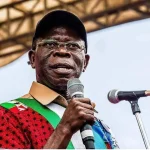
By Akin Alade
Fresh developments have emerged in the controversy surrounding the alleged ₦210 trillion discrepancy linked to the Nigerian National Petroleum Company Limited (NNPCL), as the Senate reportedly moved to clarify its position and challenge the basis of claims that such an amount was missing from the national oil company’s accounts.
The dispute centers on the ongoing review of NNPCL’s audited financial records and oversight activities by the Senate Public Accounts Committee. Questions have been raised over public statements suggesting that ₦210 trillion could not be accounted for, with critics arguing that the figure may have been misunderstood, exaggerated, or taken out of the proper accounting context.

According to reports, several lawmakers and stakeholders have cautioned against presenting unresolved audit queries as evidence of missing funds, stressing that audit observations often involve reconciliations, accounting classifications, outstanding documentation, and financial clarifications that require further examination before conclusions can be reached.

The Senate was also reported to have distanced itself from remarks attributed to Senator Adams Oshiomhole regarding the alleged missing funds, emphasizing that any official position on the matter must emerge through established legislative procedures and not through individual comments.
Observers of the petroleum sector have noted that the ₦210 trillion figure generated significant public concern because of its scale and potential implications for Nigeria’s oil and gas industry. However, analysts have urged caution, arguing that allegations involving public finances should be supported by verified facts and comprehensive investigations.
The controversy has reignited debate over transparency, accountability, and financial reporting within the petroleum sector. While advocates of the probe insist that all audit queries must be thoroughly investigated, others have warned against sensational claims that could undermine public confidence and investor trust in the industry without conclusive evidence.
Stakeholders have therefore called for a transparent, evidence-driven review process that will allow Nigerians to understand the true status of the financial issues under investigation. They argue that legislative oversight remains essential, but must be conducted in a manner that prioritizes facts, due process, and institutional credibility.
As discussions continue, attention remains focused on the outcome of the Senate’s review and any official findings that may emerge regarding the audit observations involving NNPCL. The outcome is expected to have significant implications for public accountability, governance, and confidence in Nigeria’s petroleum sector.


