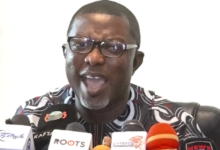
Prophet Muyiwa Akogun Denies ₦400,000 Fraud Allegation as Police Investigation Continues


Prophet Muyiwa Akogun Denies ₦400,000 Fraud Allegation as Police Investigation Continues
By Akin Alade
A controversy surrounding a video circulating on social media has brought Prophet Dr Muyiwa Akogun into the public spotlight after a man identified as Rotimi Daniel reportedly raised allegations concerning an alleged ₦400,000 transaction involving a woman said to be close to him.
The development has generated reactions online, but information subsequently made available raises important questions about whether the allegations were sufficiently investigated before the matter was taken to the court of public opinion.
At the centre of the controversy is an allegation that the woman paid ₦400,000 for what was described as spiritual work after allegedly communicating with someone she believed to be Prophet Dr Muyiwa Akogun.
Akogun has strongly denied receiving the money or having any involvement in the alleged transaction.
According to the prophet’s account, a person described as one of his spiritual sons, who is also close to Rotimi Daniel, became concerned after seeing the video and decided to intervene in an attempt to establish what actually happened and find an amicable solution.
The intermediary reportedly contacted Akogun and asked him to explain his side of the story.
The cleric maintained that he knew nothing about the alleged transaction and denied collecting ₦400,000 from the woman.
Conference Call Raises Fresh Questions
In an effort to clarify the allegation, a telephone conversation was reportedly arranged involving the parties.
According to Akogun’s account of that conversation, the woman was asked whether she and the prophet had ever physically met.
She reportedly explained that her communication had taken place through a telephone number which she believed belonged to the cleric. She was also said to have shared that contact with other people whom she introduced to the supposed prophet.
The critical question then became: Who actually owned and operated the telephone number and bank account through which the alleged transaction was conducted?
Akogun reportedly requested that the telephone number used for the communications and the bank-account details into which the ₦400,000 was allegedly transferred be produced for verification.
According to the cleric, neither the telephone number nor the account details presented to him belonged to him.
If independently established by investigators, that distinction would be significant because a transfer made to an account controlled by an unknown third party cannot, by itself, establish that Akogun received the money.
The identity of the owner of the account, the registered subscriber behind the telephone line and the digital trail connecting the communications therefore remain crucial issues for investigators to establish.
Prophet Says He Had Previously Warned About Impersonators
Akogun further stated that the alleged impersonation problem did not begin with the present controversy.
According to him, he had previously released a video in February warning members of the public about people allegedly using his identity and name to approach unsuspecting individuals.
That earlier disclaimer could become relevant to the investigation, particularly if investigators establish that unauthorised persons had been presenting themselves as the cleric before the current allegation emerged.
The prophet also stated that suspected fraudulent activities involving the use of his identity had previously been reported to the police and that the matter is presently under investigation at the Police Headquarters in Akure.
According to information provided for this report, an individual identified as Adewale Ogo Emi was at one stage arrested in connection with the investigation but was subsequently found not to be responsible and released.
That development itself demonstrates why allegations involving digital identities should be handled carefully. An accusation, an arrest or the circulation of a person’s name does not establish guilt.
Why Should Akogun Refund Money He Says He Never Received?
Despite Akogun’s explanation, Rotimi Daniel was reportedly not satisfied and allegedly maintained that the prophet should refund the ₦400,000 to the woman.
That position raises a fundamental question at the heart of the controversy:
Can someone reasonably be required to refund money that available transaction records have not established was paid to him?
Before responsibility can fairly be assigned, basic questions should be answered.
Who owned the account that received the ₦400,000? Who registered or controlled the telephone number used to communicate with the woman? What name appeared on the receiving bank account? Was there any transaction directly connecting Akogun to the money? And was the person communicating with the woman actually the prophet or an alleged impersonator?
These are matters capable of being established through banking records, telecommunications information and police investigation rather than social-media speculation.
If evidence eventually establishes that Akogun received or authorised the receipt of the money, that evidence should speak for itself. Equally, if investigators establish that another person impersonated him and collected the money without his knowledge, fairness demands that his reputation should not be destroyed for an offence allegedly committed by somebody else.
Social Media Must Not Become a Substitute for Investigation
The controversy highlights a growing danger in the digital age: allegations can travel around the world before the accused person has even been given an opportunity to respond.
Fraud allegations are serious. Victims deserve justice, and anybody who loses money through deception deserves proper investigation and assistance from law-enforcement agencies.
But the pursuit of justice must also protect innocent people from being wrongly identified as perpetrators.
Freedom of expression does not remove the need for responsibility, verification and fairness, particularly when publishing allegations capable of seriously damaging another person’s reputation.
Nigeria’s Cybercrimes (Prohibition, Prevention, etc.) Act 2015 was amended in 2024, including changes to Section 24. The amended provision deals with specified categories of online communications, including certain knowingly false communications and communications involving threats, bullying or harassment under particular circumstances. Whether any particular social-media publication constitutes an offence is ultimately a matter for investigators and the courts after considering the evidence and the precise provisions of the law.
It would therefore be inappropriate to pronounce Rotimi Daniel—or anyone commenting on the controversy—guilty of cybercrime merely because a video or comment was published.
The same principle applies to Akogun: he should not be pronounced guilty of fraud merely because somebody has accused him on social media.
Where Is the ₦400,000?
Perhaps the most important investigative question is not who made the loudest accusation online but where the ₦400,000 actually went.
Following the money could provide the clearest answer.
Banking records can potentially identify the account holder who received the disputed funds. Telecommunications and digital evidence may similarly help investigators determine who operated the telephone number allegedly used to communicate with the woman.
These are evidential questions for the appropriate authorities.
Until those questions are conclusively answered, presenting Akogun as a proven fraudster would go beyond the presently stated facts.
Akogun Appeals to Followers for Calm
Despite the controversy, Prophet Dr Muyiwa Akogun has reportedly appealed to his followers, spiritual children and supporters in Nigeria and abroad to remain calm and avoid confrontations over the allegations.
Rather than encouraging supporters to respond angrily on social media, the cleric has asked them to allow the authorities to complete their investigation.
That approach is particularly important because online arguments can easily escalate and potentially prejudice an ongoing investigation.
Those who believe Akogun has been wrongly accused should present relevant evidence to investigators. Likewise, anyone possessing evidence supporting the original allegation should submit it to the police.
Who Is Behind the Alleged Impersonation?
The bigger issue now goes beyond the disagreement between Akogun and Rotimi Daniel.
If someone actually impersonated the prophet, communicated with unsuspecting members of the public and collected money using an account unrelated to the cleric, identifying that individual should become the central objective.
The woman who allegedly lost ₦400,000 deserves to know who received her money.
Akogun equally deserves to know whether somebody has been exploiting his name and reputation.
And the public deserves accurate information rather than conclusions reached before investigators complete their work.
The ongoing police investigation therefore offers the most credible route towards resolving the controversy.
Until investigators establish who controlled the disputed telephone number, who owned the receiving bank account and who ultimately benefited from the alleged ₦400,000 payment, caution remains essential.
An allegation is not a conviction, a viral video is not a court judgment, and social-media popularity cannot substitute for evidence.
For Prophet Dr Muyiwa Akogun, the message to his followers remains one of calm: allow the investigation to run its course and allow the evidence to identify whoever may have been responsible.
If an impersonator is ultimately established to have been behind the transaction, the expectation is that the police will pursue the appropriate legal process and bring any person found culpable before the law.