

Professor Nathaniel Durojaye Oyerinde: The Ogbomoso Scholar Among Africa’s Earliest Professors


Professor Nathaniel Durojaye Oyerinde: The Ogbomoso Scholar Among Africa’s Earliest Professors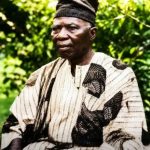
Long before modern Nigeria began producing globally celebrated academics, one man from Ogbomoso had already carved his name into the history of education in Africa. That man was Professor Nathaniel Durojaye Oyerinde, widely regarded as one of the earliest professors in Nigeria and among the first Black African educationalists to earn a Ph.D-level academic distinction and attain professorial recognition.
Born in October 1875 into the family of Pa David Aworinde and Madam Adeyemi Aworinde in Ogbomoso, Oyo State, Professor Oyerinde emerged from humble beginnings to become one of the most respected intellectual figures in Nigerian history.
He hailed from Ile-Igbagbo in Isale Afon, an area historically regarded as one of the roots of Christianity in Ogbomoso. His educational journey began at Baptist Day School, Osupa, Ogbomoso, before he later attended Baptist Day School in Lagos between 1898 and 1901.

Driven by passion for education and spiritual development, Oyerinde also attended the Preachers’ Training Class established by Rev. C.E. Smith in Ogbomoso. His academic excellence later earned him opportunities abroad, where he attended Wayland Academy and Virginia Union University in the United States.

At Virginia Union University, he obtained a Bachelor of Arts degree in 1914 and a Bachelor of Divinity degree in 1915. He further pursued postgraduate studies at the University of Chicago, majoring in Hebrew before returning to Nigeria in 1916.
Historians and education scholars have consistently described Professor Oyerinde as one of the earliest Nigerians and Africans to attain such advanced academic qualifications during the colonial era, making him a symbol of intellectual excellence in Black Africa.
Upon returning to Nigeria, he dedicated his life to teaching, leadership and nation-building. He taught at Baptist Academy, Ogbomoso between 1916 and 1921 before serving at Baptist College and Seminary, Ogbomoso from 1922 to 1935.
Beyond academics, Professor Oyerinde played major leadership roles within the Nigerian Baptist community. He served as Recording Secretary of the Nigerian Baptist Convention in 1923 and 1924 and later became President of the Convention from 1926 to 1937.
His influence also extended into politics and community development. In 1935, he was nominated into Nigeria’s Legislative Council in Lagos to represent Oyo Province, a position he held until 1944. The same year, he became a full-time council member of the Ogbomoso District Council as President of the Ogbomoso Progressive Union (OPU), an organization he founded in 1912.
Recognizing his educational achievements and leadership qualities, Oba Alabi Afolabi Oyewumi, Ajagungbade II, appointed him Otun Baale of Ogbomoso in 1936, making him one of the most influential traditional title holders of his era.
Professor Oyerinde was also instrumental to the establishment of several educational institutions in Ogbomoso. He contributed immensely to the development of continuation classes and the People’s Institute founded in 1938, where he invited his associate, Professor Eyo Ita, to serve as headmaster.
He was among the founders of Ogbomoso Grammar School and Ogbomoso Girls High School and served for many years as Chairman of the Board of Governors of Ogbomoso Grammar School.
In recognition of his outstanding service to education and national development, he was conferred with the Order of the British Empire (OBE) during the birthday honours of Queen Elizabeth II in 1947. He was also honoured with the Member of the Federal Republic (MFR) award and later appointed Justice of the Peace (JP).
Aside from education and politics, Professor Oyerinde was deeply interested in economic development. In 1948, he submitted a memorandum titled “Economic Development of Ogbomoso,” emphasizing the economic potential of cocoa, rubber and mahogany production in advancing the prosperity of Ogbomoso people.
He was equally a historian and author. In 1934, he published “Iwe Itan Ogbomoso,” regarded as one of the earliest written historical accounts of Ogbomoso.
After decades of service to education, religion, politics and community development, Professor Nathaniel Durojaye Oyerinde passed away on April 18, 1977, at the remarkable age of 102.
Today, his legacy remains deeply rooted in Ogbomoso, Nigerian education and African intellectual history, where he is remembered as a pioneer scholar, visionary leader and one of the greatest educational icons of his generation.


