



Kagame Critic Beheaded in Uganda, Fear Grips Rwandan Exiles
The gruesome murder of a former Rwandan soldier and outspoken government critic has renewed concerns over the safety of political dissidents living outside their home countries.


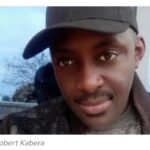
The mysterious killing of Robert Kabera, a former Rwandan army officer and vocal critic of President Paul Kagame, has sparked fresh concerns over the security of political exiles in Africa following the discovery of his headless body in neighbouring Uganda.
Kabera, 50, who reportedly fled Rwanda in 2020 over fears of political persecution, was found dead on Saturday, October 17, 2026, in Luwala Village, Mpigi District, on the outskirts of Uganda’s capital, Kampala. His killing has raised questions about the protection available to individuals who seek refuge in neighbouring countries after falling out with their governments.
Ugandan police confirmed that the former soldier’s body was discovered by residents, who immediately alerted security authorities. Police spokesperson Kituuma Rusoke disclosed that the victim had been decapitated and that his head had not been recovered as investigators intensified efforts to establish the circumstances surrounding the murder.
The killing is believed to have occurred between the night of October 16 and the early hours of October 17. Kabera’s remains were subsequently transferred to Mulago City Mortuary for further examination, while detectives began gathering evidence that could help identify those responsible.
Before his death, Kabera had established himself as a prominent critic of the Rwandan government through his YouTube platform, Major Robert TV, which attracted more than 140,000 subscribers. His broadcasts frequently questioned President Kagame’s leadership and featured political commentary critical of the administration in Kigali.
Kabera’s relationship with the Rwandan authorities deteriorated after his departure from the military. He was subsequently accused of a sexual offence involving a minor, an allegation he denied, maintaining that he was being subjected to political persecution. His decision to relocate to Uganda was reportedly motivated by concerns about his personal safety.
Reacting to the tragedy, his brother, Victor Agaba, expressed concern over the circumstances surrounding the killing, insisting that Kabera had not been involved in any known personal dispute in Uganda. His family has called for answers as investigators attempt to establish whether the murder was connected to personal circumstances, criminal activities or his political background.
The opposition Rwanda National Congress has also condemned the killing, demanding a transparent and comprehensive investigation. The group maintained that the death of another Rwandan government critic in exile should prompt greater international attention to the security challenges confronting political dissidents outside Rwanda.
Kabera’s death has revived memories of previous killings involving prominent Rwandan opposition figures abroad. Former intelligence chief Patrick Karegeya was found dead in a South African hotel in 2014, while other Rwandan dissidents have been killed in Mozambique and South Africa under circumstances that generated international controversy.
President Kagame, who has dominated Rwanda’s political landscape since the aftermath of the 1994 genocide, has received international recognition for economic development and national reconstruction. However, his administration has also faced persistent allegations from political opponents and human rights organisations concerning restrictions on political freedom, suppression of dissent and intimidation of government critics. The Rwandan government has consistently denied targeting political opponents.
Although Kabera’s murder has generated speculation about possible political motives, Ugandan security authorities have not established any connection between the killing and the Rwandan government. No suspect has been publicly identified, and investigators have urged that conclusions should not be drawn before the investigation is completed.
The tragedy has once again placed the safety of political refugees and exiled opposition figures under international scrutiny, particularly in countries where dissidents seek protection from alleged persecution in their homelands.
As investigations continue, attention remains focused on Uganda’s ability to unravel the circumstances surrounding Kabera’s death and bring those responsible to justice. For Rwandan political exiles, the killing has reinforced a troubling question about whether crossing an international border necessarily guarantees safety from violence and intimidation.


