2027: Opposition Unity Push Thickens as Parties Seek Single Candidate Against Tinubu


2027: Opposition Unity Push Thickens as Parties Seek Single Candidate Against Tinubu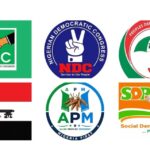
By Akin Alade


ABUJA — The political process aimed at building a united opposition front against President Bola Ahmed Tinubu ahead of the 2027 presidential election appears to be gathering momentum, with opposition parties and political groups increasingly working towards the emergence of a single presidential candidate. What began largely as discussions about cooperation has now moved towards committees, working groups and a proposed roadmap for resolving the difficult question of candidate selection. Several opposition parties and groups, including the African Democratic Congress (ADC), Allied Peoples Movement (APM), Nigeria Democratic Congress (NDC), a faction of the Peoples Democratic Party (PDP), Peoples Redemption Party (PRP) and Social Democratic Party (SDP), were represented at an Abuja summit where the proposal was advanced.
The development gives the opposition’s 2027 project a more organised dimension, but it also exposes the enormous challenge ahead. Coalition advocates are proposing structures to coordinate political parties, communication, legal strategy, reforms and the eventual emergence of a common candidate. The objective is to prevent the fragmentation of opposition votes and create a platform capable of mounting a coordinated challenge to the ruling APC. However, the proposed coalition still has to reconcile different political interests, party structures and presidential ambitions before its plans can become a unified electoral machine.
At the centre of the negotiations are prominent opposition figures and their political networks, including former Vice President Atiku Abubakar and former Anambra State Governor Peter Obi. Their absence from some of the coalition’s major meetings has highlighted the difference between broad opposition cooperation and actual agreement among leading presidential contenders. The difficult question remains whether politicians with established national followings will accept a selection process that could require one or more of them to step aside for another candidate.
The PDP factor further complicates the process. While a faction of the party has endorsed the proposal for a single opposition candidate, divisions within the PDP remain an important obstacle to any comprehensive coalition. Earlier opposition meetings also exposed disagreements, with some political factions and parties distancing themselves from resolutions reached at gatherings they said they had not formally authorised. These developments demonstrate that opposition unity requires more than prominent politicians appearing together; it must eventually involve party structures, candidates, governors, lawmakers and grassroots organisations.
The latest initiative also follows earlier efforts to build an opposition alliance, including the April meeting in Ibadan where politicians discussed cooperation and the possibility of presenting a common presidential candidate. The subsequent disagreements demonstrated how difficult it could be to transform political consensus among a section of leaders into formal agreement across competing parties. The new Abuja process is therefore attempting to create a more structured framework in which participating parties can negotiate the rules before determining the eventual candidate.
Another significant component of the emerging framework is a proposed four-year transition programme and broader reform agenda. Supporters of the proposal argue that a coalition needs to tell Nigerians what it intends to do beyond defeating the incumbent. Discussions have therefore included a National Covenant for Democratic Renewal, a transition charter, a national reform programme and a roadmap towards a common presidential candidate. Such proposals could become central to negotiations because they offer participating politicians a broader political bargain rather than simply asking them to surrender individual ambitions.
For the APC, the opposition’s attempt to consolidate its forces is an important development in the 2027 political environment, although the ruling party has maintained confidence in its political strength. A single opposition candidate, if eventually agreed upon, could alter the structure of the contest by bringing different political networks under one banner. But an alliance on paper does not automatically translate into the transfer of voters from one party or candidate to another. The coalition would still have to build a common message, maintain internal discipline and persuade supporters of different political traditions to accept its eventual candidate.
The decisive test, therefore, will be whether the opposition can move from anti-incumbency politics to an agreed political project. Its emerging process shows that efforts to challenge Tinubu in 2027 are becoming more organised, but major questions over leadership, candidate selection, party structures, ideology and power-sharing remain unresolved. The opposition has increasingly found a common negotiating table; the next challenge is determining whether its major players can agree on the rules, accept the outcome and transform their separate structures into one functioning electoral machine before the 2027 presidential contest.