



2027: Obi Rejects OK Movement Campaign Council as NDC Dispute Deepens
The battle over campaign authority within the political camp backing Peter Obi and Rabiu Kwankwaso has intensified, with Obi rejecting the 59-member campaign council announced by the Obi-Kwankwaso (OK) Movement ahead of the 2027 presidential election.

The development has exposed a deeper disagreement over who should control campaign structures, grassroots mobilisation and political machinery as preparations for the 2027 election gather momentum.
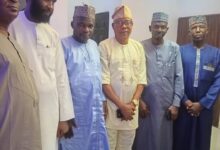

Obi, the presidential candidate of the Nigeria Democratic Congress (NDC), said the NDC remained the political platform on which he and Kwankwaso would contest, while the OK Movement, Obidient groups and Kwankwasiyya should operate as support organisations.
He specifically rejected the campaign council unveiled by the OK Movement, saying he was not involved in its formation and that support groups should not assume functions belonging to the political party.
The dispute followed the September 17 announcement of a 59-member OK Movement Presidential Campaign Council, comprising zonal and state coordinators as well as officials responsible for mobilisation, strategy, women affairs, security, legal matters and other areas.
The NDC subsequently dissociated itself from the structure, maintaining that its official Presidential Campaign Council could only be constituted through the appropriate organs of the party.
However, the OK Movement has refused to surrender its organisational structure, insisting that it remains an independent political organisation with its own leadership, principles and internal framework.
Its National Director-General, John Ozyl Ughulu, said the movement’s campaign council remained valid and operational despite the objections raised by the NDC leadership and Obi.
The movement has also maintained that its national, state, local government and ward structures belong to the organisation and cannot simply be absorbed or dissolved by the political party.
The disagreement therefore goes beyond the disputed 59-member list. At its centre is the question of how an independent support movement should relate to the political party under which its preferred candidates are contesting.
For the NDC, the party is the formal political vehicle for the 2027 presidential ticket, giving its leadership responsibility for official campaign structures and party operations.
For the OK Movement, its supporters have a separate organisational identity and grassroots network which it says should remain intact while supporting the Obi-Kwankwaso ticket.
The NDC had earlier moved to establish its own campaign machinery, with Obi and Kwankwaso given latitude to nominate key officials of the party’s Presidential Campaign Council in consultation with the party leadership.
Obi’s intervention has now added another dimension to the disagreement because it places the presidential candidate himself firmly on the side of the formal NDC structure.
The development could make the relationship between the party and its support organisations an important issue as the 2027 campaign structure takes shape.
For the moment, both sides appear to maintain distinct positions: the NDC insists on the authority of the party’s formal structure, while the OK Movement insists on its right to maintain its independent political machinery.
The unfolding dispute underscores the organisational challenges that can emerge when established party structures and large grassroots support movements operate around the same presidential ticket.
With the 2027 election approaching, attention will now focus on whether the NDC and OK Movement can establish clearly defined roles for their respective structures or whether the disagreement over campaign authority will continue.


