

2027 Elections: NHRC, ActionAid Warn Against Hate Speech, Political Intimidation, Party Disputes


2027 Elections: NHRC, ActionAid Warn Against Hate Speech, Political Intimidation, Party Disputes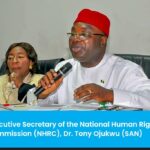
The National Human Rights Commission (NHRC) and ActionAid have raised fresh concerns over the growing use of hate speech, political intimidation and unresolved internal party disputes as Nigeria moves closer to the 2027 general elections.
The organisations warned that inflammatory political rhetoric and prolonged disagreements within political parties could threaten peaceful elections, discourage political participation and undermine public confidence in Nigeria’s democratic institutions.

Speaking at a press conference in Abuja, NHRC Executive Secretary Tony Ojukwu warned political actors, religious leaders and other influential Nigerians against statements capable of promoting hatred or hostility.

According to the commission, freedom of expression remains a fundamental right, but it should not be used to incite violence, dehumanise individuals or communities or deliberately provoke hostility.
The NHRC expressed concern that inflammatory statements, if allowed to spread unchecked, could gradually normalise discrimination and intimidation and eventually create an environment conducive to electoral violence.
Ojukwu said the commission’s intervention was not directed at any political party, ethnic group, religious organisation or individual, stressing that its primary responsibility was protecting human dignity and creating conditions for peaceful, credible and inclusive elections.
The commission disclosed that it had recently expressed concern about statements attributed to Sheikh Sani Yahaya Jingir and Senator Francis Fadahunsi, which it believed had the potential to deepen divisions and encourage violence.
As part of measures to address the problem, the NHRC announced the establishment of a situation room to monitor hate speech, incitement and other forms of divisive rhetoric ahead of the 2027 elections. It also unveiled a toll-free reporting line, 6472, through which members of the public can report incidents.
Meanwhile, ActionAid has called for stronger intervention by the Independent National Electoral Commission (INEC) in resolving internal political party disputes before they escalate into prolonged legal battles capable of disrupting the electoral process.
The recommendation emerged from the fifth session of ActionAid’s Independent Judicial Accountability Panel (IJAP), comprising retired judges, academics, law reform advocates, media professionals and civil society representatives.
Chairman of the panel, retired Justice Adekunle Owoade, argued that INEC, as the regulatory institution overseeing political parties and elections, should play a more proactive role in addressing internal party disagreements.
The panel examined recent judicial decisions concerning internal party affairs and observed that courts generally avoid interfering in such disputes, except where breaches of a political party’s constitution make judicial intervention necessary.
It also raised concerns over Sections 83(5) and 83(6) of the Electoral Act 2026, saying the provisions appeared to create uncertainty concerning the extent of judicial intervention in political party affairs.
IJAP consequently called for a stronger regulatory role for INEC, arguing that early intervention could help reduce disputes that often begin with controversial congresses, primaries and candidate-selection processes before eventually reaching the courts.
The panel also proposed significant changes to Nigeria’s election litigation system. It recommended that disputes arising from governorship, Senate and House of Representatives elections should ordinarily terminate at the Court of Appeal, with access to the Supreme Court permitted only in exceptional circumstances and with leave of the appellate court.
Another proposal seeks to prevent political appointees and senior INEC officials from moving directly into partisan politics after leaving the electoral commission. IJAP recommended a five-year restriction for affected officials.
The panel equally advocated constitutional recognition of independent candidates, arguing that opening the electoral system to candidates outside established political parties could broaden participation and reduce the influence of political godfathers.
It further proposed constitutional changes that would enable citizens to institute public-interest cases where alleged violations of the Electoral Act or Constitution occur during elections.
The warnings come as political activities intensify across Nigeria ahead of the 2027 elections, with parties strengthening grassroots structures, resolving internal disagreements and positioning candidates for various elective offices.
The concerns raised by the NHRC and ActionAid highlight challenges that could become increasingly important as campaigning intensifies — particularly misinformation, hate speech, political intolerance, intimidation, internal party crises and election-related litigation.
With political competition expected to become more intense in the months ahead, stakeholders say preventing inflammatory rhetoric from escalating into physical confrontation will require cooperation among political parties, candidates, INEC, security agencies, traditional and religious leaders, civil society organisations and the media.
The NHRC maintained that preventive action remains critical, stressing that authorities and political actors should not wait until divisive rhetoric produces violence before intervening.
As Nigeria approaches another major electoral cycle, the developments have again placed the spotlight on the ability of institutions to guarantee political tolerance, credible party processes and peaceful competition.
Ultimately, the credibility of the 2027 general elections may depend not only on what happens at polling units, but also on how effectively political disputes, inflammatory rhetoric and intimidation are addressed long before Nigerians cast their ballots.


