

News
Inside ADC’s Leadership Crisis: How Internal Power Struggles Could Reshape Nigeria’s 2027 Elections


Inside ADC’s Leadership Crisis: How Internal Power Struggles Could Reshape Nigeria’s 2027 Elections
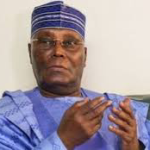

As Nigeria gradually inches toward the 2027 general elections, a quiet but consequential crisis is unfolding within the African Democratic Congress (ADC)—one that could determine whether some of the country’s most prominent opposition figures even make it onto the ballot.
At the heart of the unfolding drama is a dispute over legitimacy, procedure, and the soul of a political party many had hoped would serve as a unifying platform for opposition heavyweights such as Atiku Abubakar, Peter Obi, and Rotimi Amaechi.
A Party, A Founder, and a Controversial Exit
The ADC was founded by Ralph Nwosu, who for years served as its national chairman and a central figure in its operations. His leadership, however, has recently come under scrutiny following claims of resignation and alleged transfer of control.
Party insiders argue that the ADC constitution clearly outlines the process for leadership transition—through a national convention, the National Executive Committee (NEC), or a structured line of succession. None of these, they insist, were properly followed.
This perceived breach of due process has now triggered a legitimacy battle that is threatening to fracture the party at a critical political moment.
The Rise of Nafiu Bala
Amid the uncertainty, Nafiu Bala, the party’s North East Vice Chairman, has emerged as a central figure. Citing the party’s constitutional provisions, Bala maintains that with Nwosu’s reported resignation, leadership should naturally devolve to him through internal succession mechanisms.
His stance has effectively drawn a line in the sand.
While some factions reportedly sought to consolidate control of the party structure through informal arrangements, Bala and his allies have resisted what they describe as an attempt to bypass institutional processes.
Legal Battle and the Question of Legitimacy
The dispute has now moved to the courts, where the legality of any leadership transfer outside constitutional provisions is being challenged. Early indications suggest the judiciary is taking the matter seriously, with orders reportedly restoring the status quo pending further hearings.
This legal intervention introduces a layer of uncertainty that could have far-reaching consequences. If the court rules that due process was violated, any actions taken under the disputed leadership—including candidate nominations—could be invalidated.
Opposition Realignments Under Threat
For opposition figures seeking a viable platform ahead of 2027, the ADC crisis presents a major setback. The party had been viewed as a potential coalition vehicle, especially for politicians navigating internal crises in their former parties.
Nyesom Wike’s influence in the People’s Democratic Party (PDP), disputes within the Labour Party, and internal tensions in the New Nigeria Peoples Party have all contributed to a broader atmosphere of political migration and uncertainty.
Yet, the ADC’s internal instability now raises a critical question: can it serve as a credible alternative platform?
A Familiar Political Pattern
Nigeria’s political history is replete with party crises, defections, and legal battles. The emergence of the All Progressives Congress (APC) itself was the result of a painstaking coalition process that involved formal mergers and institutional negotiations.
Observers note that successful political realignments often depend not just on influence or resources, but on adherence to legal frameworks and internal democracy—elements now at the center of the ADC dispute.
What Lies Ahead
As the courts deliberate and party factions dig in, the stakes continue to rise. A prolonged legal battle could leave the ADC unable to field candidates in 2027, effectively sidelining key opposition figures who may have banked on the party as their political vehicle.
For now, the crisis serves as a stark reminder of the fragile nature of political coalitions—and the high cost of internal discord in a system where timing, structure, and legality are everything.
Whether the ADC emerges unified or further divided may well shape the contours of Nigeria’s next electoral contest.
Advertisement


