

2027: Makinde Challenges Tinubu on Budget Transparency, Says Nigerians Must Demand Accountability


2027: Makinde Challenges Tinubu on Budget Transparency, Says Nigerians Must Demand Accountability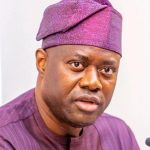
Oyo State Governor and presidential candidate of the Allied Peoples Movement (APM), Seyi Makinde, has intensified his criticism of President Bola Ahmed Tinubu’s administration, declaring that the 2027 general election should be a referendum on fiscal accountability, equitable development and the management of Nigeria’s resources.
Speaking at the APM South-West Town Hall meeting in Akure, Ondo State, Makinde questioned the Federal Government’s budget implementation process, alleging that inconsistencies in fiscal management and political favouritism were undermining public confidence in governance.

The governor challenged the Tinubu administration to provide greater clarity on the country’s budget implementation, questioning whether the Federal Government was still executing provisions from previous fiscal years. He argued that Nigerians deserved transparent information about approved budgets, released funds, completed projects and outstanding financial commitments.

Drawing comparisons with his administration in Oyo State, Makinde claimed that budget performance had improved from approximately 28 to 30 per cent to over 70 per cent since he assumed office. He maintained that his government had sustained a January-to-December budget cycle, describing fiscal discipline and effective implementation as essential ingredients of responsible leadership.
Beyond budgetary concerns, the APM presidential candidate criticised what he described as the politics of entitlement and nepotism, warning that Nigeria’s development must never be determined by the ethnic background, political connections or geographical origin of those occupying public offices. He insisted that national resources should serve all citizens rather than privileged individuals or selected regions.
Makinde also dismissed suggestions that his presidential ambition should be abandoned because President Tinubu comes from the South-West. Citing the 1999 presidential election contested by Olusegun Obasanjo and Olu Falae, he argued that democracy should encourage competition based on competence, leadership experience and credible development programmes rather than regional sentiment.
Unveiling aspects of his proposed Reset Nigeria agenda, the governor promised to prioritise economic productivity, infrastructure development, education, improved security and greater opportunities for young people and women. He maintained that sustainable prosperity could only emerge when government policies encouraged productive activities, protected citizens and ensured continuity in public infrastructure projects.
However, the governor’s criticism also raises questions about the standards by which political leaders should be assessed. Beyond campaign declarations, Nigerians will be looking for independently verifiable budget performance records, measurable development achievements and practical policy alternatives from both the ruling party and opposition candidates. Makinde’s claims about Oyo State’s fiscal performance and his allegations against the Federal Government remain matters requiring documentary scrutiny.
As political activities gather momentum ahead of the 2027 presidential election, Makinde’s confrontation with Tinubu signals an emerging contest over economic management, public accountability and the distribution of national resources. Whether his message resonates with voters may ultimately depend on his ability to demonstrate that his proposed alternative offers measurable improvements over the existing administration.


