

Wike vs Amaechi: How Rivers’ Fierce Political Rivalry Reshaped Nigerian Politics


Wike vs Amaechi: How Rivers’ Fierce Political Rivalry Reshaped Nigerian Politics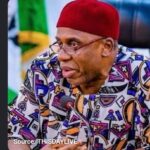
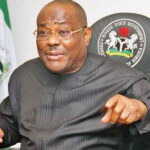
By Akin Alade

Few political rivalries in Nigeria’s Fourth Republic have endured as long or attracted as much national attention as the battle between the Minister of the Federal Capital Territory (FCT), Nyesom Wike, and former Rivers State Governor and former Minister of Transportation, Rt. Hon. Rotimi Amaechi.

What began as a relationship between a political mentor and a trusted ally has evolved into one of Nigeria’s most enduring political feuds, influencing power dynamics in Rivers State and shaping national politics for more than a decade.
The latest chapter in the rivalry emerged after Wike accused Amaechi of playing a decisive role in the defeat of former President Goodluck Jonathan in the 2015 presidential election. Wike argued that Amaechi’s political influence within the opposition at the time helped pave the way for Jonathan’s defeat, insisting that history should properly record the role the former Rivers governor played in ending Jonathan’s administration. The allegation has once again brought the long-standing feud between the two political heavyweights into national focus.
Political observers recall that Wike and Amaechi were once inseparable allies. During Amaechi’s administration as Governor of Rivers State between 2007 and 2015, Wike served in his cabinet before later moving to the Federal Government as Minister of State for Education under former President Goodluck Jonathan. At the time, both men were regarded as members of the same political family, working together to consolidate power in Rivers State.
However, the relationship gradually deteriorated over disagreements over political succession, party loyalty and control of the state’s political structure. By the build-up to the 2015 governorship election, the alliance had collapsed completely. Amaechi aligned with the All Progressives Congress (APC), while Wike remained in the Peoples Democratic Party (PDP), eventually emerging governor of Rivers State. Since then, both men have remained fierce political opponents, with their rivalry defining the state’s political landscape.
The conflict soon extended beyond Rivers State. While Amaechi served as Minister of Transportation under President Muhammadu Buhari, Wike became one of the most outspoken opposition governors in Nigeria. Both leaders repeatedly exchanged accusations over governance, elections, federal appointments and political leadership, with neither showing any willingness to back down.
Several respected political leaders, elders and stakeholders reportedly made attempts over the years to reconcile the two Rivers politicians. Meetings were held behind closed doors in an effort to restore peace, but every reconciliation move ended without success. Political analysts believe the disagreement has grown beyond politics into a deeply personal rivalry that has resisted every effort at settlement.
The political equation changed again after the 2023 presidential election. Rt. Hon. Rotimi Amaechi, one of the founding members of the APC and a major figure in the coalition that brought the party to power in 2015, contested the party’s presidential primary but lost. Although he had served as a two-time minister under the APC-led Federal Government, he later distanced himself from the ruling party.
According to political analysts, Amaechi’s decision to leave the APC was influenced by changing political realities within the party. One analyst argued that Amaechi believed the growing influence of Wike within the national political space had altered the party’s power structure. Despite not being one of the party’s founding members, Wike has emerged as one of the most influential political figures working closely with the APC-led Federal Government.
The analyst concluded that Amaechi may have seen what he described as “Wike’s political handwriting on the APC’s winning board,” believing that Wike’s growing influence in the party and within the President Bola Ahmed Tinubu administration had significantly reshaped the political equation. Although this interpretation reflects the opinion of political observers rather than a public statement from Amaechi, it underscores the widespread perception of Wike’s expanding national political influence.
Observers also note that both politicians possess different leadership styles. Amaechi is widely recognised for his organisational skills, political strategy and grassroots mobilisation, while Wike is known for his assertive leadership, bold political decisions, strong negotiating ability and infrastructure-driven governance. Their contrasting approaches have contributed to one of the most compelling rivalries in Nigeria’s democratic history.
As preparations for the 2027 general elections gather momentum, analysts believe the rivalry between Wike and Amaechi will continue to shape political developments in Rivers State and influence alignments at the national level. Both men still command substantial political followings and remain key actors in Nigeria’s political landscape.
Whether the two former allies will eventually reconcile remains uncertain. For now, every public statement, political move and strategic alliance involving either Wike or Amaechi continues to attract widespread attention, reinforcing the significance of a rivalry that has endured for more than a decade and continues to redefine the balance of power in Rivers State and Nigerian politics.


