



UK Political Crisis: Six Prime Ministers Lead Britain in Just 10 Years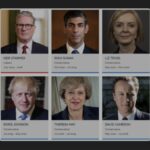
LONDON, United Kingdom – The United Kingdom has witnessed an unprecedented wave of political instability over the past decade, with six different prime ministers occupying Downing Street within ten years.


The rapid turnover in leadership reflects a turbulent period in British politics marked by Brexit, economic uncertainty, the COVID-19 pandemic, internal party disputes, and changing public sentiment. From David Cameron’s resignation following the Brexit referendum to Keir Starmer’s recent departure, each administration has faced unique challenges that reshaped the country’s political landscape.
David Cameron (2010–2016)
David Cameron served as Prime Minister until July 2016. His government focused on economic reforms and austerity measures aimed at reducing public debt following the global financial crisis.
However, his political legacy became closely tied to the Brexit referendum. After voters chose to leave the European Union in June 2016, Cameron resigned, arguing that a new leader should oversee the UK’s withdrawal process.
Theresa May (2016–2019)
Theresa May succeeded Cameron and inherited the complex task of negotiating Britain’s exit from the European Union.
Her administration was dominated by Brexit negotiations, but repeated failures to secure parliamentary approval for her withdrawal agreement weakened her position. Mounting pressure from lawmakers and party members eventually forced her resignation in 2019.
Boris Johnson (2019–2022)
Boris Johnson became Prime Minister on a promise to “Get Brexit Done.” He successfully led Britain out of the European Union in January 2020 and later navigated the country through the COVID-19 pandemic.
Despite significant electoral success, Johnson’s administration became embroiled in several controversies, including the “Partygate” scandal. Growing dissatisfaction within the Conservative Party ultimately led to his resignation in 2022.
Liz Truss (2022)
Liz Truss had the shortest tenure of any British Prime Minister in modern history. She took office in September 2022 but resigned after just 45 days.
Her government’s controversial economic policies triggered market instability, causing widespread concern among investors and political allies. The fallout led to her swift departure from office.
Rishi Sunak (2022–2024)
Rishi Sunak assumed office after Truss’s resignation and sought to restore confidence in the British economy.
His administration focused on controlling inflation, stabilizing financial markets, and addressing challenges related to immigration, public sector strikes, and the cost-of-living crisis. Sunak’s tenure ended after the Conservative Party suffered defeat in the 2024 general election.
Keir Starmer (2024–2026)
Keir Starmer became Prime Minister after leading the Labour Party to victory in the 2024 general election, ending 14 years of Conservative rule.
His government pursued reforms in public services and economic management. However, declining popularity, internal political tensions, and mounting pressure within his party culminated in his resignation in 2026, making him the sixth British Prime Minister to leave office within a decade.
A Decade of Political Change
The frequent change of leadership has highlighted the challenges facing modern British politics. Analysts point to Brexit, economic pressures, leadership crises, and shifting voter expectations as key factors behind the revolving door at Number 10 Downing Street.
With Britain preparing for yet another leadership transition, political observers say the next Prime Minister will face the difficult task of restoring stability and public confidence in government.


