

Tinubu’s Economic Gamble: From Crisis Management to the Search for Real Recovery


Tinubu’s Economic Gamble: From Crisis Management to the Search for Real Recovery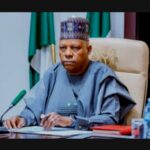
By Akin Alade


President Bola Tinubu’s economic reforms have entered a critical phase, with the Federal Government increasingly shifting the conversation from preventing economic collapse to delivering tangible relief and prosperity for millions of Nigerians.
Vice President Kashim Shettima has defended the administration’s record, arguing that Nigeria was dangerously close to economic collapse when Tinubu assumed office and that difficult decisions, particularly the removal of petrol subsidy and the reform of the foreign exchange regime, helped prevent the country from falling apart.
But beyond the political argument over whether the reforms were necessary, the more important question confronting the Tinubu administration is whether economic stabilisation can eventually translate into better living standards for ordinary Nigerians.
Shettima’s latest defence of the reforms came after his meeting with Tinubu in Lagos, where he acknowledged the economic pains Nigerians have endured but maintained that the government inherited a severely weakened financial position.
According to the Vice President, the administration inherited foreign reserves of less than $3.9 billion, which he said was insufficient to cover even one month of fuel imports. He argued that Tinubu therefore had to make difficult decisions to prevent a more devastating economic crisis.
The removal of petrol subsidy and the adjustment of the multiple foreign exchange regime became the defining economic decisions of the administration. While both policies attracted widespread criticism because of their immediate impact on prices and household finances, the government has consistently argued that maintaining the old system was no longer financially sustainable.
The central argument from the Presidency is therefore straightforward: Nigeria had to endure significant short-term pain to escape a deeper fiscal and economic crisis. Tinubu’s supporters believe that the reforms have created the foundation for a more sustainable economy after years of dependence on costly subsidies and distortions in the foreign exchange market.
However, economic recovery cannot be measured only by government revenue, foreign reserves, exchange-rate movements or headline growth figures. For the average Nigerian, recovery is ultimately measured by the price of food, transportation, rent, electricity, education and healthcare.
This is where the administration faces its biggest test. Recent economic indicators suggest that some macroeconomic conditions are improving, including stronger GDP growth and lower inflation compared with previous periods. Yet declining inflation does not mean prices have returned to their previous levels; it only means prices are rising at a slower rate.
That distinction explains why the government’s economic narrative sometimes appears different from the experience of households. A trader may hear that the economy is stabilising while simultaneously struggling to restock goods. A worker may see improved economic statistics but still discover that monthly income buys less food and services than it did before.
The Tinubu administration appears increasingly aware of this gap between macroeconomic recovery and household welfare. The Federal Government has been introducing interventions designed to reduce transportation costs, expand access to education and cushion the effects of the reforms.
Shettima announced that the government plans to deploy 10,600 electric tricycles across the North-East, alongside 300 buses and electric taxis under an e-logistics programme. The initiative is intended to reduce transportation costs and provide relief to communities facing high mobility expenses.
The Nigerian Education Loan Fund, NELFUND, has also been presented by the administration as another mechanism for ensuring that students from financially disadvantaged families are not denied access to tertiary education. Shettima described the programme as a major intervention for students from low-income backgrounds.
These measures suggest that the next chapter of Tinubu’s economic agenda may be less about defending the necessity of reforms and more about demonstrating their dividends.
There is also a political dimension to the debate. With the 2027 general elections approaching, economic performance will inevitably become one of the major issues voters use to assess the Tinubu administration and competing political platforms.
The opposition has challenged the government’s positive assessment of the economy, pointing to persistent hardship, poverty and declining purchasing power. That disagreement means Nigerians will increasingly be confronted with two competing narratives: one focused on economic stabilisation and the other on the cost of achieving it.
For Tinubu, the challenge is to ensure that the sacrifices demanded from Nigerians are eventually matched by visible improvements in their daily lives. Stabilising an economy is important, but stabilisation is only the beginning of the journey toward prosperity.
The administration must therefore deepen efforts to reduce transportation and energy costs, expand employment opportunities, strengthen local production, improve food security and ensure that government interventions reach the people most affected by the economic transition.
Ultimately, history may judge Tinubu’s economic reforms not simply by whether they prevented a fiscal crisis, but by whether they successfully transformed Nigeria from an economy struggling to survive into one capable of providing broad-based prosperity.
For now, the President’s economic gamble remains a work in progress. The government says the foundation for recovery has been laid; millions of Nigerians are waiting for that recovery to become visible in their homes, businesses and pockets.
That is the real test ahead: not merely whether Nigeria was saved from economic collapse, but whether the country can move from survival to shared prosperity.


