

Peter Obi Questions Tinubu’s Competence, Demands Accountability Ahead of 2027 Election


Peter Obi Questions Tinubu’s Competence, Demands Accountability Ahead of 2027 Election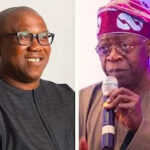
By Akin Alade


As political activities intensify ahead of Nigeria’s 2027 presidential election, the presidential candidate of the Nigeria Democratic Congress (NDC), Mr Peter Obi, has launched a fresh attack on President Bola Ahmed Tinubu’s leadership, questioning his capacity to govern and challenging him to account for his administration’s performance over the past three years.
Obi, a former governor of Anambra State, declared that Nigeria requires a president with the competence, energy and commitment to confront the country’s mounting economic, security and developmental challenges.
Speaking during a political town hall meeting in Abakaliki, Ebonyi State, on Thursday, October 29, 2026, the opposition presidential candidate argued that the country’s leadership challenges demand greater presidential engagement, transparency and accountability.
The former Labour Party presidential candidate particularly faulted Tinubu’s indication that he might not campaign across all 36 states during the 2027 presidential election because of his responsibilities as the country’s chief executive.
According to Obi, a president seeking another mandate should be prepared to visit Nigerians across the federation, explain government policies and present measurable achievements rather than avoid direct engagement with the electorate.
He questioned what he described as a contradiction between Tinubu’s international travels and his reluctance to undertake an extensive nationwide campaign.
Obi alleged that the President had spent more than 260 days outside Nigeria since assuming office, insisting that someone capable of undertaking numerous foreign trips should also be able to devote time to engaging citizens across the 36 states.
The NDC presidential candidate subsequently called on Tinubu to step aside, maintaining that Nigeria needs a different approach to leadership ahead of the 2027 general elections.
Beyond his criticism of the President’s capacity, Obi demanded a comprehensive explanation of how the Federal Government had utilised borrowed funds and other public resources during the administration.
He challenged Tinubu to visit Ebonyi State and explain the tangible benefits of his government’s economic policies, infrastructure investments and borrowing decisions to ordinary Nigerians.
The former governor maintained that the 2027 presidential contest should provide an opportunity for citizens to assess the administration’s performance against its campaign promises, particularly in areas affecting livelihoods and national development.
Obi’s criticism comes amid growing political exchanges between the ruling All Progressives Congress (APC) and opposition parties as presidential candidates intensify their campaigns and seek to convince Nigerians of their readiness to govern.
However, his assertions about Tinubu’s energy and competence remain political assessments rather than independently established conclusions. His claim concerning the President’s cumulative days abroad also requires verification against official travel records.
Addressing supporters in Abakaliki, Obi further warned against allowing ethnic or regional considerations to determine voting decisions during the forthcoming presidential election.
He urged residents of Ebonyi State and the wider South-East to evaluate presidential candidates based on competence, integrity, experience and their ability to deliver meaningful development.
The NDC candidate insisted that his presidential ambition should be assessed on his qualifications and proposed solutions to Nigeria’s challenges rather than his ethnic background.
Outlining his governance priorities, Obi promised that an administration led by him would introduce urgent interventions in critical sectors, including national security, education, healthcare, food production, electricity and the fight against corruption.
On insecurity, he pledged to strengthen the operational capacity of security agencies, improve the protection of vulnerable communities and confront kidnapping and other violent crimes.
He also identified Nigeria’s large population of out-of-school children as a major national emergency, promising reforms aimed at improving access to quality education and reducing the number of children excluded from formal learning.
On agriculture and food security, Obi said his government would prioritise the protection of farmers, encourage increased domestic food production and create conditions for agricultural exports.
The former governor equally promised to strengthen primary healthcare delivery by ensuring that communities across Nigeria have access to functional health facilities.
He also pledged tougher anti-corruption measures, arguing that public resources must be managed transparently and deployed towards improving the welfare of Nigerians.
Political observers expect leadership competence, economic hardship, insecurity, government borrowing and accountability to feature prominently in the 2027 presidential contest.
While Tinubu and the APC are expected to defend their economic reforms and record in office, opposition candidates are increasingly presenting the election as an opportunity for Nigerians to demand a different style of governance.
For Obi, the central question ahead of the election is whether the current administration has delivered sufficient improvements in the lives of Nigerians to justify another mandate.
As the political contest gathers momentum, voters will ultimately have the responsibility of evaluating competing claims, examining policy proposals and determining which candidate offers the most credible path towards national stability, economic recovery and sustainable development.


