Politics

Faleke’s Hamzat Pronouncement and the Dangerous Normalisation of State Capture in Lagos Politics

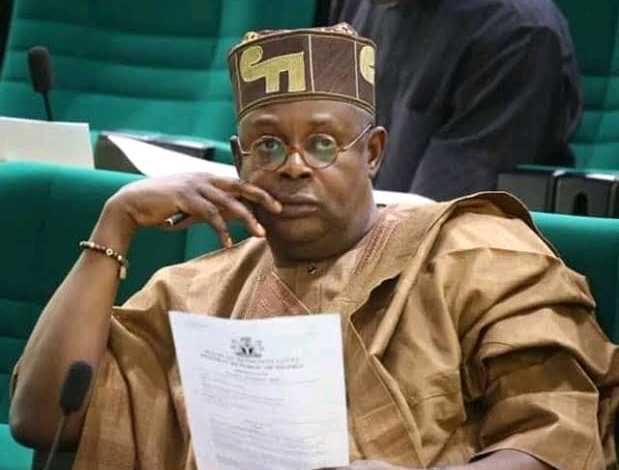
James Abiodun Faleke’s public directive urging Ikeja residents and by extension Lagosians to support Dr. Kadri Obafemi Hamzat for the 2027 governorship is not merely an endorsement gone too far. It is symptomatic of a far deeper and more troubling pathology within Lagos politics: the creeping normalisation of elite-managed democracy and the dangerous assumption that the political destiny of the state can be predetermined by a closed circle of insiders.

What Faleke communicated was not support. It was preselection.

His remarks conveyed the unmistakable impression that the contest for the highest office in Lagos may already be treated in certain quarters as an internal arrangement to be ratified, not a democratic process to be contested.

That is precisely how democratic institutions are hollowed out not by military force, but by the gradual substitution of public choice with elite consensus.

Advertisement

Ikeja, as the administrative capital and symbolic political centre of Lagos, cannot and must not become the staging ground for what increasingly resembles a managed succession system. To use Ikeja as the launchpad for an early coronation of a preferred candidate is to reduce one of the state’s most politically conscious constituencies to a ceremonial instrument in a broader architecture of political choreography.

Implications extend far beyond Ikeja.

Faleke’s pronouncement reflects a troubling belief within sections of the political establishment that Lagos can continue indefinitely under a quasi-feudal arrangement in which a narrow network of insiders determines leadership outcomes in advance, rotates power internally, and presents the electorate with carefully managed inevitabilities rather than genuine choices.

That model may have endured in the past. It is now under growing strain.

Lagos in 2027 is not Lagos of old.

Its electorate is younger, more informed, more impatient, and increasingly hostile to the perception that democratic outcomes are scripted before campaigns even begin.

What makes Faleke’s intervention especially provocative is not simply its substance, but its posture the confidence of a political actor speaking not as though he were participating in democratic debate, but as though he were announcing the decision of a governing board.

Such rhetoric deepens public cynicism and reinforces the perception that electoral politics in Lagos is becoming less about persuasion and performance, and more about elite certification.

It also reopens broader questions about legitimacy, inclusion, and who gets to define the political future of Lagos. In a state where debates over representation and political belonging remain highly sensitive, it is politically tone-deaf for any actor particularly one whose roots lie outside the indigenous political fabric of the state to assume the posture of gatekeeper over its future.

Political relevance in Lagos does not confer proprietary rights over Lagos.

If Dr. Hamzat seeks to govern, he should present himself to the electorate through open democratic competition, defend his record, articulate his vision, and earn the mandate of the people. Any perception that his candidacy is being assembled through insider endorsements before the race has even properly begun does him no favours and undermines the legitimacy of his ambitions.

The core issue here is larger than Hamzat. Larger than Faleke.

It is whether Lagos will continue down the path of managed democracy where power is circulated within a protected elite ecosystem or whether it will embrace a more open and genuinely competitive political order.

That is the real debate Faleke has inadvertently triggered and the answer from Lagosians should be unequivocal.

No politician can pre-allocate the future of Lagos.

No constituency not even Ikeja exists to validate elite succession plans.

The governorship of Lagos is not the property of any caucus, clique, or political syndicate.

Democracy loses meaning when leaders are effectively selected before voters are consulted.

If Lagos is to remain the democratic pace-setter it claims to be, then its people must resist every attempt subtle or overt to convert elections into coronations.

Faleke’s comments should therefore be treated not as a routine endorsement, but as a warning signal: a revealing glimpse into how sections of the political elite still view Lagos not as a republic of citizens, but as an enterprise to be managed from above.

That mindset must be rejected.

Because once a political class begins to believe it can choose leaders without consequence, democracy itself becomes little more than theatre.

~ Ayo Olusegun writes from Alausa. 

Related Articles

Back to top button

Nigeria Standard Magazine: A Voice for Excellence and Innovation

Introduction

Nigeria Standard Magazine is a premier publication dedicated to showcasing the vibrant culture, business excellence, political landscape, entertainment, and technological advancements of Nigeria. Our mission is to provide insightful, fact-based journalism while promoting Nigerian achievements on a global scale. With a commitment to quality journalism and innovative reporting, Nigeria Standard Magazine covers a wide range of topics, including business, politics, entertainment, education, and lifestyle. This article will explore how the magazine is revolutionizing media in Nigeria and why it remains a leading source of news and information.

The Role of Nigeria Standard Magazine in Media Excellence

1. A Trusted News Source

Nigeria Standard Magazine has built a reputation for delivering accurate, reliable, and timely news. Unlike sensationalist media, we focus on in-depth analysis, investigative journalism, and balanced reporting. Our team of seasoned journalists ensures that every piece published meets the highest standards of ethical journalism.

2. Covering Nigeria’s Political Landscape

With Nigeria’s dynamic political environment, staying informed is crucial. Nigeria Standard Magazine provides comprehensive coverage of political developments, elections, policy changes, and governance. We offer expert opinions, interviews with political leaders, and policy analysis that help Nigerians make informed decisions.

3. Business and Economic Insights

Nigeria Standard Magazine serves as a vital resource for entrepreneurs, investors, and business professionals. Our business section covers: By providing actionable insights, we help businesses navigate the complex Nigerian economy and make informed decisions.

Entertainment and Lifestyle: Celebrating Nigerian Talent

4. Nollywood and Music Industry Updates

Nigeria’s entertainment industry is one of the fastest-growing in the world. Nigeria Standard Magazine keeps readers updated on: Our entertainment section provides an insider’s look into the vibrant world of Nigerian arts and culture.

5. Fashion and Lifestyle Trends

From traditional attire to modern fashion trends, Nigeria Standard Magazine covers the evolving fashion scene. Our lifestyle section highlights:

Technology and Innovation: Nigeria’s Digital Transformation

6. Tech Startups and Innovations

Nigeria is emerging as a tech hub in Africa, with startups revolutionizing various industries. Nigeria Standard Magazine reports on: Our readers gain valuable insights into the tech ecosystem and the future of innovation in Nigeria.

7. Education and Career Development

Education is key to national development. Nigeria Standard Magazine supports knowledge-sharing through: By focusing on education, we empower Nigerian youth to achieve academic and professional success.

Why Nigeria Standard Magazine Stands Out

8. Digital and Print Accessibility

We understand the importance of accessibility in today’s digital world. Nigeria Standard Magazine is available in both print and digital formats, ensuring that readers can access our content anytime, anywhere. Our online platform is optimized for mobile users, making it easy to read the latest news on the go.

9. Engaging Multimedia Content

To keep our audience engaged, we incorporate: This multimedia approach enhances user experience and provides diverse ways to consume information.

10. Community Engagement and Social Media Presence

Nigeria Standard Magazine actively engages with readers through social media platforms such as Twitter, Facebook, Instagram, and LinkedIn. Our interactive approach includes: This strong online presence ensures that we remain connected with our audience and foster meaningful conversations.

SEO Strategies for Nigeria Standard Magazine

To maintain visibility and attract more readers, we employ the following SEO strategies:

11. Keyword Optimization

Our content incorporates relevant keywords such as: By strategically placing these keywords in our articles, we enhance search engine rankings and reach a wider audience.

12. High-Quality Content and Backlinks

We prioritize quality content that is: By collaborating with industry experts and media partners, we build credible backlinks that boost our domain authority.

13. Mobile Optimization and Fast Loading Speeds

With a growing number of readers accessing content via mobile devices, we ensure:

14. Social Media Integration

Our articles are easily shareable across social media platforms, driving organic traffic. We encourage readers to:

Conclusion: The Future of Nigeria Standard Magazine

As Nigeria continues to evolve, Nigeria Standard Magazine remains committed to delivering accurate, engaging, and insightful content. Our mission is to inform, educate, and inspire Nigerians and the global audience about the nation’s achievements and potential. With a strong digital presence, high-quality journalism, and a deep understanding of our readers’ needs, Nigeria Standard Magazine will continue to be a trusted voice in Nigerian media. Stay connected with us for the latest updates on business, politics, entertainment, technology, and more. Follow us on social media and visit our website for real-time news and analysis.