

Obasanjo Warns Nigeria’s Rising Debt Could Destroy Future Generations, Challenges Tinubu


Obasanjo Warns Nigeria’s Rising Debt Could Destroy Future Generations, Challenges Tinubu
**By Akin Alade**


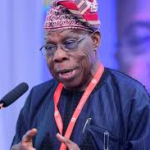
Former President Olusegun Obasanjo has raised fresh concerns over Nigeria’s growing debt burden, warning that excessive government borrowing could mortgage the future of generations yet unborn and deepen the country’s economic difficulties.
Obasanjo, who strongly criticised President Bola Ahmed Tinubu’s position on borrowing, declared that the long-term consequences of accumulating unsustainable debts could be more devastating than many Nigerians currently imagine.
The former Nigerian leader spoke at the Ajibosin 3.0 Symposium held at the Olusegun Obasanjo Presidential Library in Abeokuta, Ogun State, where policymakers, academics and other stakeholders gathered to examine the role of artificial intelligence in national development.
The event, themed “Leveraging Artificial Intelligence to Solve Grassroots Problems and Accelerate National Development,” provided an opportunity for Obasanjo to revisit Nigeria’s economic challenges, growing dependence on foreign loans and the responsibilities of political leaders.
## Obasanjo Challenges Tinubu Over Nigeria’s Borrowing Policy
Obasanjo’s remarks followed President Tinubu’s earlier defence of government borrowing, in which the president maintained that obtaining loans to finance development projects should not necessarily be considered harmful, provided the country could meet its repayment obligations.
Rejecting that position, Obasanjo described the comparison between borrowing and leprosy as unacceptable, insisting that poorly managed public debt could create economic problems extending far beyond the tenure of any administration.
“Debt is worse than leprosy,” the former president declared, warning that its consequences could destroy generations.
His remarks have renewed debate over the sustainability of Nigeria’s public debt, particularly as the Federal Government continues to seek additional financing for infrastructure development and other national priorities.
## Fresh Foreign Loans Raise Questions About Nigeria’s Economic Future
The former president’s warning comes against the backdrop of Tinubu’s recent request to the National Assembly for approval of a supplementary external borrowing plan involving approximately $20.52 billion and €1.045 billion.
The proposed financing is intended to support projects and programmes covering transportation, electricity, agriculture, healthcare, education, water supply, security and employment generation.
The Tinubu administration has consistently maintained that strategic borrowing is necessary to address Nigeria’s infrastructure deficit, stimulate economic activities and create opportunities for sustainable growth.
However, critics argue that the central issue is not merely the availability of loans but the government’s capacity to manage borrowed funds effectively, generate sufficient economic returns and prevent excessive debt-servicing obligations from undermining essential public services.
Obasanjo’s intervention has therefore brought renewed attention to the need for transparency, accountability and measurable results in the management of public borrowing.
## Obasanjo Questions Naira Depreciation and Economic Leadership
Beyond the country’s debt profile, the former president expressed dissatisfaction with Nigeria’s economic performance over several decades, particularly the persistent depreciation of the naira against major international currencies.
Recalling the period when he established his farming business approximately 47 years ago, Obasanjo said the naira was significantly stronger than its present value.
He questioned how Nigeria, despite its enormous human and natural resources, had experienced such a dramatic decline in the purchasing power and international value of its currency.
The former president also challenged successive political leaders to explain what had gone wrong with the country’s economic management and why development outcomes had remained below expectations.
His observations highlighted longstanding concerns over productivity, economic diversification, industrial development and the country’s dependence on imported goods and foreign financing.
## Former President Faults Dependence on World Bank, IMF
Obasanjo also expressed reservations about Nigeria’s continued reliance on economic recommendations from international financial institutions, particularly the World Bank and International Monetary Fund.
According to him, economic policies designed outside Africa may not always adequately reflect the peculiar circumstances, developmental priorities and social realities of Nigeria.
He argued that African countries must develop the capacity to formulate independent economic strategies rather than automatically adopting externally recommended policies.
The former president maintained that sustainable development would require stronger domestic institutions, effective leadership and economic decisions tailored to the needs of ordinary citizens.
## Artificial Intelligence Must Serve Nigeria’s Development
Turning to the central theme of the symposium, Obasanjo cautioned that artificial intelligence could become another instrument of foreign technological dependence unless African countries deliberately develop the capacity to control and utilise emerging technologies.
He urged policymakers to focus on practical applications of artificial intelligence that could improve agricultural productivity, healthcare delivery, education and grassroots development.
The former president also expressed concern about the large number of Nigerian children outside the formal education system, warning that continued neglect of education could create serious social and economic consequences.
He emphasised that technological advancement would only deliver meaningful benefits if Nigeria invested in human capital development and developed solutions appropriate to its national circumstances.
## Tinubu Defends Borrowing as Necessary for Infrastructure Growth
Despite Obasanjo’s criticism, President Tinubu has defended his administration’s borrowing strategy, arguing that Nigeria requires substantial investment to overcome decades of infrastructure deficiencies.
The president has maintained that loans directed towards productive projects can support economic expansion, improve transportation networks, strengthen electricity supply and stimulate employment opportunities.
His administration has also linked infrastructure investment to its ambition of building a trillion-dollar Nigerian economy by 2030.
Nevertheless, the competing positions of Tinubu and Obasanjo have brought a fundamental economic question into sharper focus: whether Nigeria’s expanding borrowing programme will generate sufficient long-term benefits to justify the financial obligations being transferred to future generations.
For millions of Nigerians confronting rising living costs, unemployment and pressure on household incomes, the outcome of that debate will depend largely on how effectively government borrowing translates into tangible improvements in living standards.
As discussions over Nigeria’s debt sustainability continue, Obasanjo’s warning reinforces the importance of responsible fiscal management, productive investment and economic policies that protect both present and future generations.


