

2027: Atiku’s Son Backs Tinubu, Launches Two-Million-Man Campaign


2027: Atiku’s Son Backs Tinubu, Launches Two-Million-Man Campaign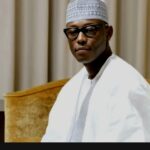
By Akin Alade


A fresh political twist has emerged ahead of Nigeria’s 2027 presidential election as Abba Abubakar, son of former Vice President Atiku Abubakar, has intensified his support for President Bola Ahmed Tinubu’s re-election bid, unveiling an ambitious nationwide mobilisation campaign despite his father’s presidential ambition.
The development highlights an unusual political division within one of Nigeria’s most prominent political families, with father and son now supporting opposing presidential interests in the race for the country’s highest political office.
Abba, who had earlier defected to the ruling All Progressives Congress (APC), reaffirmed his commitment to Tinubu’s second-term ambition during a press conference in Abuja on Friday, October 30, 2026.
The younger Abubakar also unveiled the Haske Bola Tinubu Organisation (HBTO), a political mobilisation platform designed to strengthen grassroots support for the president across Nigeria’s six geopolitical zones.
Atiku’s Son Defends Decision to Support Tinubu
Addressing questions surrounding his decision to support his father’s political rival, Abba insisted that his political affiliation was a matter of personal conviction rather than family loyalty.
He maintained that every Nigerian has the constitutional freedom to support political leaders and parties that reflect their beliefs, aspirations and expectations for national development.
According to him, his decision to back Tinubu was informed by his assessment of the administration’s policies and economic reforms.
Abba acknowledged that his political position could generate public debate because of his father’s involvement in opposition politics but insisted that family relationships should not prevent individuals from making independent political decisions.
He explained that democracy becomes stronger when citizens are allowed to express different political opinions without intimidation or unnecessary personal attacks.
Two-Million-Man March Planned Across Nigeria
Unveiling his political strategy, Abba announced plans to organise a two-million-person mobilisation march across Nigeria’s six geopolitical zones, beginning from the Federal Capital Territory, Abuja.
He explained that the initiative would provide a platform for engaging grassroots supporters, community leaders, youth organisations and political stakeholders ahead of the 2027 general elections.
The Haske Bola Tinubu Organisation, according to him, intends to establish coordinated structures capable of promoting the president’s achievements and strengthening public understanding of government policies.
The planned mobilisation is expected to cover the North-West, North-East, North-Central, South-West, South-East and South-South geopolitical zones.
Abba said the organisation would concentrate on building a disciplined political movement rather than merely attracting crowds to campaign gatherings.
Atiku’s Son Aligns with Wike to Deliver FCT, Rivers for Tinubu
In another significant development, Abba disclosed plans to collaborate with the Minister of the Federal Capital Territory, Nyesom Wike, in mobilising electoral support for Tinubu.
He identified Wike as an important political figure in the organisation’s mobilisation strategy, particularly in the Federal Capital Territory and Rivers State.
According to him, the organisation intends to complement the minister’s political efforts towards securing victory for Tinubu in both territories during the 2027 presidential election.
Abba further disclosed that a major mobilisation programme was being planned for Rivers State in the first week of November.
The proposed collaboration reflects the increasingly complex political alignments ahead of the presidential contest, with politicians and political groups crossing traditional party boundaries to support preferred candidates.
Ten Luxury Buses Announced to Ease Transportation Challenges
Beyond political mobilisation, Abba announced plans to introduce a transportation support initiative involving an initial fleet of 10 luxury buses.
The initiative, according to him, is intended to reduce commuting difficulties faced by residents of the Federal Capital Territory before being expanded to other parts of the country.
He explained that the organisation believes political support should extend beyond campaign promises and public declarations to practical interventions capable of improving people’s lives.
The buses are expected to form part of the organisation’s community-oriented activities, although further operational details have yet to be established.
Abba maintained that the programme would demonstrate the organisation’s commitment to supporting Nigerians while promoting the administration’s Renewed Hope Agenda.
Tinubu’s Economic Reforms Influence Abba’s Political Choice
Explaining the reasons behind his support for the president, Abba identified several government initiatives that he believes could contribute to Nigeria’s long-term economic development.
Among the programmes he highlighted were the Nigerian Education Loan Fund (NELFUND), investments in road infrastructure, increased allocations to state governments and measures intended to cushion the effects of economic hardship.
He acknowledged that some government reforms had created difficult adjustments for Nigerians but argued that their potential long-term benefits should also be considered.
According to him, his political decision was based on his assessment of the administration’s direction and his belief that its policies could address longstanding structural challenges.
Political Implications for Atiku’s 2027 Presidential Ambition
The younger Abubakar’s decision introduces an interesting dimension to the political calculations surrounding the 2027 presidential election.
His father, Atiku Abubakar, remains a prominent opposition figure seeking to challenge Tinubu through the African Democratic Congress (ADC).
Although political disagreements among family members are not unusual in democratic societies, Abba’s public commitment to campaigning against his father’s presidential interest carries considerable symbolic significance.
Political observers may interpret the development as an indication of the changing alliances shaping Nigeria’s political environment.
However, the electoral significance of Abba’s mobilisation campaign will depend on its ability to translate organisational activities, public engagements and political endorsements into actual votes.
His decision does not necessarily represent the political position of other members of the Atiku family or the wider opposition movement.
Kano Women Mobilise Support for Tinubu, Governor Yusuf
Meanwhile, the Director of the Kano Professional Women Directorate for Presidential and Governorship Elections, Dr. Maryam Shetty, has announced plans to mobilise 500,000 professional women in support of Tinubu and Kano State Governor Abba Kabir Yusuf.
Speaking during an engagement with journalists in Kano, Shetty said the initiative would bring together women from different professional backgrounds to participate actively in politics and community development.
She explained that the platform would accommodate medical doctors, pharmacists, physiotherapists, entrepreneurs and other professionals interested in contributing their expertise to governance.
According to her, the initiative would also identify challenges confronting professional women and develop programmes aimed at addressing their needs.
2027 Election: Family Loyalty Meets Political Conviction
As preparations for the 2027 general elections gather momentum, the decision of Atiku’s son to campaign for Tinubu illustrates how personal political convictions can differ from family expectations.
For the ruling APC, Abba’s involvement provides another platform for expanding grassroots mobilisation and strengthening political alliances.
For the opposition, the development underscores the challenge of maintaining broad political support in an environment characterised by shifting loyalties and competing interests.
Ultimately, the effectiveness of the younger Abubakar’s campaign will be determined not by his family background but by the strength of his political organisation, the credibility of its programmes and its ability to convince voters.
With the presidential contest approaching, the political choices of influential individuals and their supporters are expected to remain an important feature of Nigeria’s evolving electoral landscape.


