

2027 Elections: ACF, Afenifere Reject Poll Suspension as Nigeria’s Restructuring Debate Deepens


2027 Elections: ACF, Afenifere Reject Poll Suspension as Nigeria’s Restructuring Debate Deepens
By Akin Alade



Nigeria’s renewed restructuring debate has exposed deep divisions over how the country should be governed, with the Arewa Consultative Forum (ACF), Afenifere and other socio-political groups questioning key aspects of a proposal by the Igbo Leaders of Thought (IL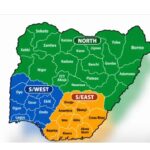 T) to establish a new regional political structure before the 2027 general elections.
The disagreement centres on a proposal for a 10-region federation, regional control of natural resources, regional police and the temporary suspension of the 2027 elections until restructuring is completed. The Igbo Leaders of Thought rejected the communiqué issued after the Abuja restructuring conference of August 20, 2026, alleging that the position of the Igbo delegation was not adequately reflected in the final document. The development has reopened questions about constitutional reform, political representation and the future of Nigeria’s federal system. <Cite refs={[“turn248613news0″,”turn970171view0”]}/>
The Arewa Consultative Forum has taken issue particularly with the proposal to suspend the elections. Its spokesperson, Professor Tukur Baba, said postponing the polls must be consistent with the provisions of the Constitution, arguing that no ethnic or socio-political organisation could unilaterally halt the democratic process. He advised the proponents of restructuring to pursue their demands through state assemblies, the National Assembly and other constitutionally recognised channels.
Baba also noted that the National Assembly had undertaken a constitutional review process, with proposals transmitted to state assemblies. According to him, the current constitutional framework remains the basis for governance until changes are lawfully adopted. The ACF’s position highlights the legal and institutional challenges involved in attempting to complete a major restructuring exercise before an election timetable already in motion.
In the South-West, Afenifere has also maintained its opposition to imposing a regional arrangement from the top down. The organisation’s National Publicity Secretary, Justice Faloye, said it remained committed to the resolutions of the 2014 National Conference, which favoured states as federating units while supporting the devolution of additional powers, including policing and control over mining. Afenifere argues that creating regions without adequate safeguards could revive concerns about minority representation and political domination.
However, opinion within the South-West is not uniform. Apagun Kole Omololu, convener of the Conscience of Yoruba Nation Group, supports autonomous regions within a voluntary federal system, provided the affected communities freely consent to the arrangement. He argued that restructuring must protect the identities, political rights and economic interests of minority communities rather than transfer excessive power from the Federal Government to new regional authorities.
The disagreement goes beyond the number of regions Nigeria should have. It raises fundamental questions about who determines regional boundaries, how natural resources would be managed, whether regional police would be subject to adequate constitutional safeguards and how communities would exercise their right to choose their political affiliations. These concerns are especially significant in areas where different ethnic groups share boundaries, economic interests and local institutions.
The proposed suspension of the 2027 elections has generated additional concern. Debo Adeniran, chairman of the Centre for Anti-Corruption and Open Leadership (CACOL) and president of the Committee for the Defence of Human Rights (CDHR), warned that postponing elections could create a democratic vacuum unless supported by a clear legal framework, broad national agreement and defined timelines. He argued that restructuring should strengthen democratic governance rather than undermine citizens’ electoral rights.
Meanwhile, the Yoruba Council Worldwide has urged stakeholders to return to the negotiating table, arguing that the restructuring question should not be dismissed because elections are approaching. Its president, Aare Sooko Oladotun Hassan, said Nigeria needs a fairer federal arrangement that gives constituent regions greater responsibility for their development while protecting minority rights. He also called for open discussion of regional resource control and decentralised policing, subject to constitutional safeguards and accountability.
The unfolding disagreement illustrates the difficulty of building a national consensus on constitutional reform in a country of diverse ethnic, cultural and regional interests. While stakeholders differ over the proposed 10-region model and the timing of restructuring, the debate has placed resource control, security, fiscal federalism and political representation firmly back on the national agenda.
As the 2027 elections approach, the challenge for Nigeria’s political and socio-cultural leaders will be to establish a credible process through which competing proposals can be considered without sacrificing constitutional order or democratic participation. Whether through constitutional amendments, a broader national conference or negotiations among the constituent communities, any lasting reform will depend on meaningful consultation, legal legitimacy and safeguards for all Nigerians.


