

2027 Elections: Wike Attacks Rainbow Coalition Critics, Defends Tinubu Alliance


2027 Elections: Wike Attacks Rainbow Coalition Critics, Defends Tinubu Alliance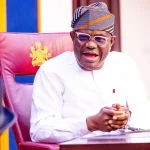
…Defends APC-PDP alliance, rallies FCT residents behind Tinubu’s re-election bid


By Akin Alade
The Minister of the Federal Capital Territory (FCT), Nyesom Wike, has intensified his political offensive ahead of the 2027 general elections, accusing opponents of the Rainbow Coalition of placing personal ambitions above political cooperation and national development.
Wike maintained that politicians who cannot successfully unite their immediate political constituencies lack the moral authority to condemn an alliance designed to bring together individuals from different political backgrounds.
The former Rivers State governor made the remarks on Monday, November 2, 2026, during the inauguration of the Gwagwalada Civic Centre and an interactive meeting involving stakeholders of the All Progressives Congress (APC) and Peoples Democratic Party (PDP) in Gwagwalada Area Council, Abuja.
His comments came amid growing disagreements over the Rainbow Coalition, a political arrangement bringing together members of different parties in support of President Bola Ahmed Tinubu’s second-term ambition.
Wike argued that political differences should not prevent leaders from working together when their interests align with the aspirations of the people.
He criticised politicians questioning the legitimacy of the coalition, accusing some of pursuing selfish interests rather than encouraging cooperation.
According to the minister, the ability of political leaders to overcome longstanding rivalries demonstrates maturity and commitment to collective progress.
He particularly commended APC and PDP stakeholders in Gwagwalada for setting aside partisan differences and embracing a common political objective.
Wike insisted that the emerging political understanding represented a significant departure from the confrontational politics that had previously characterised relationships among major political actors in the FCT.
The minister maintained that development, effective representation and political stability should take precedence over unnecessary disagreements among political parties.
Beyond defending the coalition, Wike used the occasion to challenge residents of the FCT to become more politically active ahead of the 2027 elections.
He warned that political endorsements and declarations of support would achieve little unless supporters translated their commitments into actual votes.
The minister urged residents to regard election day as an important opportunity to determine their political future rather than allowing routine economic activities to prevent them from exercising their civic responsibilities.
He specifically called for grassroots mobilisation across the six area councils of the FCT, stressing that political participation remained essential to strengthening democratic representation.
Wike also questioned the quality of representation the FCT had received at the National Assembly, arguing that elected officials must demonstrate a proper understanding of the challenges confronting their constituents.
He identified Gwagwalada, Kuje, Bwari, Kwali, Abaji and the Abuja Municipal Area Council as communities requiring responsive representation and sustained federal attention.
The minister consequently canvassed support for former FCT Senator Philip Aduda and other candidates backed by the coalition, describing effective legislative representation as essential to addressing the territory’s developmental needs.
His remarks further reinforced his commitment to Tinubu’s re-election, despite continuing to identify politically with the PDP.
The Rainbow Coalition has generated considerable debate within Nigeria’s political landscape, particularly among APC stakeholders who have expressed reservations about an arrangement that allows politicians to support the president while retaining their membership of other political parties.
Some critics believe such political cooperation could weaken established party structures and create conflicting loyalties during governorship and legislative elections.
However, Wike has consistently maintained that supporting Tinubu does not necessarily require every politician involved in the coalition to abandon their existing political platform.
The controversy has also raised broader questions about the future of political alliances in Nigeria, where personal relationships, electoral calculations and strategic interests increasingly influence cooperation across party boundaries.
Political observers believe the coalition’s effectiveness will ultimately depend on its ability to reconcile competing interests, maintain internal cohesion and convert political agreements into electoral victories.
At the Gwagwalada gathering, APC stakeholders welcomed the emerging cooperation, describing it as an opportunity to strengthen political understanding and improve grassroots mobilisation.
The event also provided an opportunity for local leaders to highlight developmental achievements and identify outstanding infrastructure needs requiring government intervention.
Among the issues raised were requests for improved road networks, additional healthcare facilities and rehabilitation of recreational infrastructure within Gwagwalada.
For Wike, however, the central message remained that political cooperation should not be sacrificed on the altar of party rivalry.
As preparations for the 2027 general elections gather momentum, the Rainbow Coalition is emerging as one of the political arrangements attracting attention within both the ruling party and sections of the opposition.
Whether the alliance will successfully overcome internal disagreements and deliver its electoral objectives remains uncertain.
Nevertheless, Wike’s latest declaration signals his determination to sustain the coalition and challenge those questioning its relevance in Nigeria’s evolving political environment.


