

PFN Backs Catholic Bishops, Says Attack on Clerics Is Attack on Entire Nigerian Church


PFN Backs Catholic Bishops, Says Attack on Clerics Is Attack on Entire Nigerian Church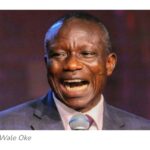
The Pentecostal Fellowship of Nigeria (PFN) has declared its solidarity with the Catholic Bishops Conference of Nigeria (CBCN), warning that any attack on Catholic bishops for speaking about the country’s challenges should be regarded as an attack on the entire Christian community.
PFN National President, Bishop Wale Oke, made the declaration while reacting to the controversy surrounding recent comments by Catholic leaders on Nigeria’s security and socio-economic situation.

Oke particularly backed concerns raised by Cardinal John Onaiyekan during a recent engagement between Catholic bishops and President Bola Tinubu, where the clerics drew attention to insecurity and hardship confronting Nigerians.

The PFN leader maintained that religious leaders have a responsibility to speak on issues affecting citizens and should not automatically be accused of engaging in partisan politics whenever they raise concerns about governance.
According to Oke, persistent killings and insecurity in several parts of the country provide sufficient grounds for religious leaders to demand greater action from those in authority.
He referenced security challenges in Benue, Southern Kaduna, Borno, Kwara, Oyo and other parts of Nigeria, insisting that the Church cannot remain silent when citizens continue to lose their lives.
Oke stressed that denominational differences should not divide Christians when matters affecting the wider Church arise, noting that Catholics, Pentecostals and other Christian denominations share a common faith.
He argued that criticism or hostility directed at Catholic bishops for expressing their concerns consequently affects the wider Christian community.
The PFN president also weighed in on the controversy surrounding provisions of the Federal Road Safety Commission Act relating to preaching and other activities inside moving commercial vehicles.
Oke strongly opposed any attempt to impose penalties on Christians merely for preaching inside buses, maintaining that evangelism remains an important aspect of the Christian faith.
The Senate had reportedly clarified that the provision was not newly introduced but had existed since 2007 and was only re-itemised. However, Oke called for its complete removal, arguing that Christians should be free to preach provided their activities do not endanger road users.
The PFN leader said he had personally preached in commercial buses for decades and maintained that such religious activities should not automatically be classified as distractions capable of causing accidents.
He further called on the National Assembly to examine broader issues concerning religious equality and Nigeria’s membership of the Organisation of Islamic Cooperation (OIC).
Oke urged lawmakers to reconsider the country’s membership of the organisation, arguing that such an important decision should reflect the wishes of Nigerians.
He also renewed calls for a review of the 1999 Constitution, alleging that some of its provisions do not adequately reflect Nigeria’s religious diversity.
On the persistent security crisis, the PFN president reiterated concerns about attacks on Christian communities while calling on the Federal Government to intensify efforts to protect lives and property irrespective of religion or ethnicity.
Oke disclosed that Christian leaders were also engaging the Presidency privately on some of their concerns, although he did not provide details of the discussions.
Meanwhile, Pastor Seyi Osuntayo of The Apostolic Church Nigeria offered a different perspective on the disagreement between the Presidency and the Catholic bishops.
Osuntayo cautioned Christian leaders against becoming deeply involved in partisan political exchanges, arguing that their interventions should focus principally on governance, national development and prayers for those in authority.
He also questioned the timing of the bishops’ intervention, warning that statements made during an electioneering period could be interpreted as partisan even when they are intended to address genuine national concerns.
Other commentators have expressed differing opinions on the controversy, with some defending the right of religious leaders to speak about poverty, insecurity and economic hardship, while others believe clerics should avoid actions capable of creating perceptions of political allegiance.
The debate comes amid heightened political activities ahead of the 2027 general elections and continuing public discussions over insecurity, cost of living, economic reforms and the appropriate role of religious organisations in Nigeria’s democratic process.


