

Economy
FG Rejects IMF Claim of ₦8 Trillion Off-Budget Spending, Defends Fiscal Transparency


FG Rejects IMF Claim of ₦8 Trillion Off-Budget Spending, Defends Fiscal Transparency
The Federal Government has dismissed allegations that it operated a “shadow budget” or spent more than ₦8 trillion outside the approved national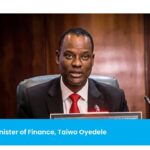 budget, describing the claims as inaccurate and misleading.
The reaction followed observations contained in the International Monetary Fund’s (IMF) latest Article IV Consultation, which suggested that public spending estimated at about two per cent of Nigeria’s Gross Domestic Product (GDP) had not been fully reflected in recent budget documents, creating differences between reported fiscal deficits and financing figures.
Responding to the report, the Minister of Finance and Coordinating Minister of the Economy, Wale Edun, said every expenditure by the Federal Government is executed in line with the Constitution and Appropriation Acts passed by the National Assembly.
He stressed that Nigeria does not operate any hidden or parallel budgeting system, adding that all government spending is subjected to established legal and institutional processes.
According to the minister, certain expenditures—including statutory transfers, debt servicing obligations, multi-year capital project rollovers and emergency interventions approved by law—may be presented differently under international accounting standards. He explained that such reporting differences should not be interpreted as evidence of illegal or undisclosed spending.
The minister added that the IMF’s observations primarily relate to differences in fiscal reporting and accounting presentation rather than any unlawful expenditure. He noted that the Federal Government is already implementing reforms aimed at improving the alignment of Nigeria’s fiscal reporting with international best practices.
He also reiterated the Tinubu administration’s commitment to greater fiscal transparency, accountability and prudent management of public finances, while continuing to strengthen collaboration with oversight institutions and development partners.


