

2027: Wike Links Rainbow Coalition Feud to National Assembly Leadership Battle


2027: Wike Links Rainbow Coalition Feud to National Assembly Leadership Battle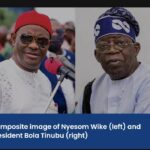
The political disagreement surrounding the Rainbow Coalition has taken a new turn after Federal Capital Territory Minister Nyesom Wike alleged that ambitions over the leadership of the National Assembly after the 2027 elections are partly behind opposition to the movement by some All Progressives Congress governors.

Wike said the resistance to the cross-party political arrangement goes beyond concerns about protecting the APC, alleging that some political actors are already positioning themselves to influence who emerges as Senate President and Speaker of the House of Representatives after the general elections.


Speaking on TVC’s Journalists’ Hangout on Monday, Wike specifically alleged that Imo State Governor and Chairman of the Progressive Governors’ Forum, Hope Uzodimma, has political interests connected to the Senate presidency.
The FCT minister declared that he would not support Uzodimma for Senate President, should such an ambition emerge.
The allegation introduces another dimension to the widening disagreement between Wike and APC governors over the Rainbow Coalition, which the former Rivers State governor says is designed to mobilise support across political parties for President Bola Tinubu’s re-election in 2027.
Wike has maintained that supporting Tinubu for another term does not mean politicians belonging to other parties must abandon their candidates in governorship, National Assembly and state House of Assembly elections.
He cited the political arrangement adopted by the G5 governors during the 2023 elections, when members backed Tinubu’s presidential bid while retaining candidates of their respective parties for other elective positions.
The APC governors, however, have publicly presented a different position.
At their recent meeting in Abuja, the Progressive Governors’ Forum declared that its members would not participate in or endorse any political arrangement capable of weakening the APC or adversely affecting its candidates.
Uzodimma, speaking for the governors, said their campaign commitment would remain with APC candidates at every level.
That position has exposed a fundamental difference between the two camps ahead of 2027.
While Wike argues that politicians can support Tinubu for President while backing candidates from different political parties in other elections, the APC governors insist that their responsibility extends beyond the presidential contest to ensuring electoral support for all candidates fielded by the ruling party.
Wike has rejected suggestions that the Rainbow Coalition is designed to take over APC structures or undermine the ruling party.
According to him, the coalition is separate from the APC and provides a platform for politicians from other parties who want to support Tinubu without necessarily defecting to the ruling party.
He has also dismissed reports suggesting that President Tinubu agreed to concede some states to the PDP or the Rainbow Coalition as part of a political deal ahead of the elections.
Wike said the President is aware of his political strategy and understands the concept behind the coalition.
The minister had earlier accused Uzodimma and Kwara State Governor AbdulRahman AbdulRazaq of being among the leading figures opposed to the Rainbow Coalition.
The governors have maintained publicly that their concern is the protection of APC structures and candidates, arguing that competing political arrangements could create divided loyalties ahead of the elections.
The latest exchange suggests that the controversy surrounding the Rainbow Coalition is increasingly becoming a contest over political structures, legislative seats and influence beyond the presidential election.
With governorship and National Assembly contests expected to run alongside the battle for the presidency in 2027, the question of whether politicians can campaign for Tinubu while opposing APC candidates in other races remains at the centre of the disagreement.


