

2027: Makinde Turns Tinubu’s Electricity Promise Into Major Test of Leadership, Pledges One-Term Presidency


2027: Makinde Turns Tinubu’s Electricity Promise Into Major Test of Leadership, Pledges One-Term Presidency
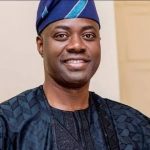
By Akin Alade


As Nigeria moves closer to the 2027 general elections, electricity supply, economic hardship and the credibility of political promises are emerging as major issues in the battle for the presidency. Oyo State Governor and Allied Peoples Movement (APM) presidential candidate, Seyi Makinde, has challenged Nigerians to assess President Bola Tinubu’s performance against his 2023 campaign commitments before deciding whom to support at the polls.
Makinde made the call during the APM’s North-East zonal town hall meeting in Yola, Adamawa State, where he criticised the Tinubu administration over persistent electricity challenges and other economic concerns. He recalled the President’s campaign remarks on fixing Nigeria’s power sector, arguing that voters should use the outcome of that commitment to evaluate his administration ahead of the next election. “Read the report by Trust Radio” (https://trustradio.com.ng/en/2027-recall-tinubus-electricity-promise-makinde-tells-nigerians).
The governor’s intervention has brought the debate over electricity supply and political accountability in Nigeria back into the spotlight. For millions of households and businesses, reliable power remains central to daily life, affecting production costs, small businesses, education and access to essential services. Makinde’s argument is that the 2027 election should provide Nigerians with an opportunity to assess whether the government has delivered on its promises rather than relying solely on campaign assurances.
Beyond the power sector, the APM candidate also questioned the effectiveness of some Federal Government economic policies, including the compressed natural gas (CNG) initiative, electric vehicle policy and the naira-for-crude arrangement. He argued that these measures had not delivered the level of relief Nigerians expected and called on the government to publish its petroleum pricing template to explain how fuel prices are determined. According to him, greater transparency would allow citizens and independent experts to examine the figures and contribute alternative solutions.
Makinde’s criticism comes amid continuing public debate over the cost of living and the consequences of economic reforms. However, the effectiveness of individual government policies requires assessment against implementation records, measurable outcomes and the broader economic circumstances in which they operate. The political contest ahead will therefore involve competing interpretations of the administration’s record, as well as the ability of opposition candidates to present credible alternatives.
In a related development, Makinde has pledged that if elected president in 2027, he would lead a transitional government of national unity for a single four-year term. He said the proposed administration would be inclusive and would focus on addressing Nigeria’s major challenges, including insecurity, poverty, inadequate electricity and economic difficulties. The pledge was also made at the APM gathering in Yola, according to THISDAY’s report published on October 11, 2026.
The proposed one-term arrangement adds another dimension to the emerging presidential contest, particularly amid discussions about regional power rotation and national unity. Makinde says his administration would prioritise practical solutions and bring together Nigerians from different backgrounds. Nevertheless, voters will need to examine the details of his proposed agenda, including how it would be funded, implemented and measured within four years.
With the 2027 elections approaching, the central question is increasingly whether political parties can translate campaign promises into tangible improvements in citizens’ lives. Electricity supply, fuel prices, employment, security and the cost of doing business are likely to remain important measures by which voters judge the competing candidates.
For President Tinubu, Makinde’s challenge places renewed attention on the government’s record and the commitments made during the 2023 campaign. For the APM candidate, the criticism also creates an opportunity to demonstrate how his proposed national unity government would deliver better results. Ultimately, Nigerians will have to weigh the claims, evidence, policies and track records of the candidates before making their choices at the ballot box.


