

2027 Presidency: Galadima Says Election Outcome Remains Uncertain Despite Growing Political Realignments


2027 Presidency: Galadima Says Election Outcome Remains Uncertain Despite Growing Political Realignments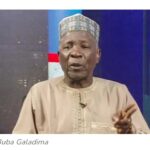
By Akin Alade


ABUJA — With Nigeria’s 2027 presidential election drawing closer and political parties intensifying their campaigns, prominent opposition figure Buba Galadima has said the eventual outcome of the contest cannot be predetermined.
Galadima, a chieftain of the Nigeria Democratic Congress (NDC), made the remarks while discussing the emerging presidential contest and the chances of the party’s candidate, Peter Obi, and his running mate, Rabiu Musa Kwankwaso. He said only God and President Bola Tinubu know what will ultimately happen in the 2027 election.
His comments come at a time when the political landscape is becoming more defined, with the Independent National Electoral Commission (INEC) having published the final list of presidential and vice-presidential candidates for the January 2027 election. The list contains 18 presidential candidates representing different political parties.
The development marks a shift from the earlier phase of speculation over possible presidential alliances and candidacies to a more structured electoral contest. Among those listed by INEC are President Bola Tinubu of the All Progressives Congress (APC), former Vice-President Atiku Abubakar of the African Democratic Congress (ADC), Peter Obi of the NDC and other presidential candidates.
Galadima’s comments also come against the backdrop of continuing efforts by opposition forces to consolidate their political strength ahead of the election. Earlier discussions among opposition figures have included the possibility of a single presidential candidate, although different political actors have expressed varying positions on whether such an arrangement is achievable.
For the ruling APC, the 2027 contest is centred on President Tinubu’s bid for another term, while opposition parties are seeking to present alternative platforms to voters. Galadima has previously spoken publicly about the prospects of an opposition challenge and the need for political forces opposed to the ruling party to work together.
Beyond party calculations, the 2027 election is also unfolding against significant economic and social pressures. Recent increases in petrol prices have renewed concerns about the cost of living, with fuel prices rising sharply in several parts of the country. The issue has become part of the political debate over the record and impact of the Federal Government’s economic reforms.
INEC’s timetable puts the presidential and National Assembly elections on January 16, 2027, while governorship and State House of Assembly elections are scheduled for February 6. The electoral commission’s published timetable means political parties and candidates now have a defined timeline for taking their campaigns to voters.
As the countdown continues, the major political question will increasingly move from speculation about who may contest to how the candidates and their parties convince Nigerians to support their programmes, records and promises. Galadima’s latest remarks underscore that, despite the growing political alignments, the final decision will be made through the electoral process.


