

2027 Bombshell: Datti Writes Off Peter Obi, Says Tinubu’s Challengers Can’t Change Nigeria


2027 Bombshell: Datti Writes Off Peter Obi, Says Tinubu’s Challengers Can’t Change Nigeria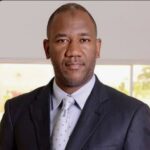
Former Labour Party vice-presidential candidate Yusuf Datti Baba-Ahmed has delivered a potentially significant blow to Nigeria’s opposition ahead of the 2027 presidential election, declaring that none of the politicians currently positioning themselves against President Bola Ahmed Tinubu can deliver the change the country requires — including his former principal, Peter Obi.
Baba-Ahmed, who ran alongside Obi on the Labour Party presidential ticket in the 2023 general election, made the striking declaration during an appearance on the Mic On Podcast while discussing Nigeria’s political direction and the emerging battle for 2027.
Asked about the capacity of politicians seeking to challenge President Tinubu, Baba-Ahmed said:
“None of the people running against President Tinubu can change the country.”
The interviewer then sought clarification on whether the assessment extended to Peter Obi.
Baba-Ahmed responded:
“Including Peter Obi.”
The response is politically significant because Baba-Ahmed was one of Obi’s closest political allies during the 2023 presidential campaign, when both men presented themselves as an alternative to Nigeria’s established political order.
Their campaign attracted considerable support, particularly among younger voters and Nigerians demanding a departure from the country’s traditional political establishment.
But Baba-Ahmed’s latest declaration suggests that the political relationship and shared vision that brought the pair together in 2022 may no longer define his assessment of Obi’s ability to transform Nigeria.
Baba-Ahmed has increasingly asserted his political independence from his former running mate.
Speaking previously about their relationship, he explained that sympathy for Obi played an important role in his decision to join the 2023 presidential project.
According to him, Obi had approached prominent political figures while attempting to build alliances ahead of the 2023 election, but they reportedly declined to join him.
Baba-Ahmed said the situation influenced his decision to support Obi and ultimately become his running mate.
He has, however, rejected suggestions that supporting Obi in 2023 meant he was permanently politically attached to the former Anambra State governor.
“Obi does not own me. I own my independence,” Baba-Ahmed said while discussing assumptions that he would automatically follow Obi’s subsequent political decisions.
His latest remarks could therefore deepen questions about the cohesion of the political forces that challenged the APC in 2023 and whether the opposition can construct a formidable coalition capable of defeating Tinubu in 2027.
The statement is particularly striking when placed against Baba-Ahmed’s position during the 2023 campaign.
At the time, he strongly defended Obi’s candidacy and presented the Labour Party ticket as capable of providing a different leadership direction for Nigeria.
Obi himself campaigned on moving Nigeria from consumption to production, strengthening institutions, improving security and establishing what he described as a new political leadership culture.
The Obi-Baba-Ahmed ticket eventually emerged as one of the three dominant forces in the 2023 presidential contest.
Three years later, however, Baba-Ahmed appears increasingly sceptical about whether the existing crop of opposition presidential hopefuls possesses what is required to fundamentally change Nigeria.
His concerns extend beyond individual candidates to the structure and strategy of opposition politics.
Baba-Ahmed has previously argued that any serious opposition movement seeking power in 2027 must begin building alliances well before the election rather than waiting until the final stages of the political cycle.
He disclosed that he had advised Obi to engage influential political figures, including former Kano State governor Rabiu Musa Kwankwaso and former Kaduna State governor Nasir El-Rufai, as part of efforts to build a broader political platform.
According to Baba-Ahmed, opposition leaders must understand electoral mathematics, regional political influence and grassroots structures if they intend to mount a credible challenge for the presidency.
His latest declaration therefore goes beyond criticism of Obi.
It raises a much larger question for Nigeria’s opposition: if none of the politicians currently challenging Tinubu can change the country, who does Baba-Ahmed believe possesses the leadership capacity to do so?
That question could become increasingly important as political realignments gather momentum ahead of 2027.
For Peter Obi and his supporters, Baba-Ahmed’s assessment represents a remarkable reversal from the optimism that characterised their joint campaign three years ago.
For President Tinubu and the ruling political establishment, meanwhile, divisions and disagreements among former opposition allies could become strategically important as preparations for the next presidential contest intensify.
But for Nigerians, Baba-Ahmed’s declaration may provoke an even broader debate about whether the country needs merely a change of government in 2027 or an entirely different generation, structure and philosophy of political leadership.
With his emphatic inclusion of Peter Obi among those he believes cannot change Nigeria, Baba-Ahmed has opened another potentially consequential chapter in the country’s rapidly evolving 2027 political battle.


