

Atiku Demands Full Account of ₦144.86bn Safe Schools Fund, Questions Rising School Insecurity


Atiku Demands Full Account of ₦144.86bn Safe Schools Fund, Questions Rising School Insecurity
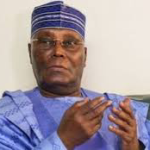
Former Vice President and African Democratic Congress (ADC) presidential candidate, Atiku Abubakar, has challenged the Federal Government to provide a comprehensive account of the ₦144.86 billion earmarked under the National Plan on Financing Safe Schools, amid renewed concerns over attacks, kidnappings and the closure of schools in parts of Nigeria.
Atiku raised the demand in a statement issued by his Senior Special Assistant on Public Communication, Phrank Shaibu, arguing that the effectiveness of the Safe Schools programme should be measured by the ability of pupils, students and teachers to attend schools without fear of attacks or abduction.

He expressed concern over reports that insecurity had disrupted educational activities across about 40 local government areas, warning that the situation could further worsen Nigeria’s out-of-school children crisis.

According to Atiku, Nigerians deserve detailed information on the implementation of the Safe Schools programme, including how much money has actually been mobilised and released, the agencies and contractors that received funds, the schools covered by the initiative, security infrastructure provided and measurable results achieved.
He maintained that budgetary allocations alone cannot be regarded as evidence of success if students and teachers remain vulnerable to terrorists, bandits and kidnappers.
Atiku argued that the fundamental objective of any school security programme should be to ensure that children can leave their homes, attend classes and return safely to their families.
The former Vice President also called for a major review of Nigeria’s approach to protecting educational institutions, proposing a decentralised and intelligence-driven security architecture involving schools, local communities and security agencies.
He said communities should play a greater role in intelligence gathering because residents often understand their environment and may notice suspicious movements before information reaches security agencies at the federal level.
Atiku proposed functional early-warning systems around vulnerable schools, rapid-response mechanisms, improved intelligence sharing and clearly defined emergency arrangements for educational institutions considered at high risk of attacks.
He also demanded greater transparency in the management of funds allocated to school security, insisting that public expenditure should be linked to specific and measurable outcomes.
The Safe Schools programme was introduced as part of government efforts to protect educational institutions following repeated attacks and mass abductions, particularly in conflict-affected areas of the country.
Atiku’s intervention comes amid renewed concerns over the security of students in parts of northern Nigeria, where attacks by armed groups have disrupted academic activities and forced some parents and communities to weigh access to education against the safety of children.
He warned that prolonged school closures could have wider social and economic consequences, including increased poverty, child labour, exploitation and vulnerability of young people to criminal and extremist groups.
Atiku consequently urged President Bola Ahmed Tinubu and security agencies to intensify operations against kidnappers and terrorists, rescue children still being held captive and ensure that those responsible for attacks on schools are brought to justice.
He maintained that protecting schools should be treated as a fundamental national security responsibility rather than merely an education policy.
The former Vice President said any effective Safe Schools initiative must combine community intelligence, rapid security response, protection of vulnerable institutions and transparent management of public funds.
He insisted that Nigerians have a right to know how resources committed to protecting schools are being utilised and whether those investments are producing tangible improvements in the safety of students and teachers.


