



Atiku’s Wage Promise Raises Bigger Question on Nigeria’s Cost of Living
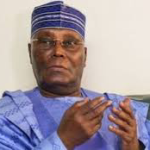
Former Vice President and African Democratic Congress (ADC) presidential candidate, Atiku Abubakar, has renewed his call for a substantial increase in Nigeria’s minimum wage, arguing that the current ₦70,000 wage floor has been weakened by rising costs of fuel, food, transportation and housing.


Atiku’s intervention comes as pressure mounts over workers’ purchasing power, but his latest proposal also raises a broader economic question: will increasing wages without simultaneously reducing the cost of production and essential goods provide a lasting solution for Nigerian families?
Nigeria’s minimum wage was increased from ₦30,000 to ₦70,000 in 2024 following negotiations involving government, labour and the private sector. The Federal Government has since indicated that another review will take place, with Chief of Staff Femi Gbajabiamila saying the existing wage no longer fully reflects current economic realities.
Atiku argues that rising petrol prices have eroded the purchasing power of workers. He cited a comparison between the purchasing capacity of ₦30,000 in 2023 and ₦70,000 at current petrol prices, contending that the increase in nominal wages has not translated into equivalent improvement in workers’ living standards.
The cost-of-living debate, however, extends beyond salaries. Recent increases in petrol prices have affected transportation and logistics costs, with their effects spreading into food and other household expenses. Reuters reported in September that petrol prices had reached around ₦1,400 per litre in Lagos and Abuja, with higher prices recorded in some northern locations.
This makes the wage debate a two-sided economic challenge: workers need incomes that can meet basic needs, while the economy also needs policies capable of bringing down the costs that consume those incomes. A higher wage that is quickly absorbed by transport, food, electricity and housing costs would provide only limited relief.
Atiku has proposed a combination of higher wages, support for domestic production, targeted social protection and intervention in the petroleum sector if elected in 2027. He has also proposed a targeted production subsidy for petroleum products refined in Nigeria, subject to spending limits, public accounting and independent auditing.
For the Tinubu administration, the immediate challenge is therefore not simply the size of the next wage increase, but how to ensure that wage adjustments translate into genuine improvements in household purchasing power. The government has previously defended its economic reforms and the 2024 wage increase, while acknowledging the need for a future wage review.
The emerging debate ahead of 2027 is consequently likely to centre on a broader question: how can Nigeria combine better wages with lower production costs, stronger domestic manufacturing, affordable energy and greater purchasing power? The answer will determine whether wage increases provide temporary relief or become part of a more sustainable improvement in living standards.


