First Niger Bridge: Vandalism Forces FG to Delay Reopening, Umahi Insists on Safety.


First Niger Bridge: Vandalism Forces FG to Delay Reopening, Umahi Insists on Safety. 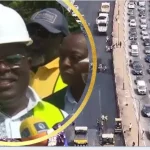
The Federal Government has put safety ahead of reopening deadlines on the First Niger Bridge, insisting that the strategic link between Anambra and Delta states will remain closed until critical structural rehabilitation is completed.


Minister of Works, Senator David Umahi, gave the indication after inspecting ongoing emergency repairs at the Onitsha Bridge Head, declaring that the government would not bow to pressure to reopen the bridge before engineers are satisfied with the work.
The development shifts attention beyond the inconvenience caused by the closure to a more serious concern over the protection of Nigeria’s critical infrastructure after vandalism affected important components of the bridge.
The First Niger Bridge was closed to traffic on September 7, 2026, for emergency maintenance and was initially expected to reopen on September 21.
However, persistent rainfall disrupted work and forced the Federal Government to extend the rehabilitation period.
More significantly, the rehabilitation became necessary after vandalism affected portions of the bridge’s expansion-joint steelwork as well as stanchion and steel-truss nuts and bolts.
Umahi said the government would not reopen the bridge simply because motorists and businesses were anxious for traffic to return.
“We are not going to be stampeded to open the bridge until the major structural work has been achieved,” the minister said during the inspection.
According to the minister, considerable progress has already been recorded by contractor SKECC.
The vandalised bolts have been replaced and secured, while a specialised expansion joint that had been stolen was manufactured and flown into the country for installation.
The government is also using the rehabilitation period to undertake additional improvements designed to enhance the condition and security of the ageing bridge.
Umahi directed the contractor to repaint structural elements and internal carriageway areas and remove illegal advertisements mounted on the bridge.
Additional solar-powered streetlights are also to be installed, while CCTV cameras will be completed and connected to the surveillance system of the Second Niger Bridge.
The introduction of CCTV surveillance underscores the growing concern about vandalism of public infrastructure and the potentially severe consequences of removing structural components from major bridges.
The rehabilitation involves more than replacing stolen components.
The Federal Ministry of Works had earlier disclosed that the intervention would include removing deteriorated asphalt and laying approximately 40 millimetres of new asphalt wearing course alongside associated maintenance and safety works.
The objective is to restore a safer and more durable riding surface while improving traffic movement along the critical transportation corridor.
The extended closure has nevertheless created difficulties for motorists, commuters and businesses travelling between Onitsha and Asaba.
Motorists have been directed to use the Second Niger Bridge through Obosi towards Asaba and other destinations while rehabilitation continues.
Reports from the area indicate that the diversion has contributed to longer journeys and higher transportation costs for some commuters.
Some travellers who ordinarily complete the journey in less than an hour have complained of spending considerably longer because of congestion and conditions along alternative routes.
The government now faces the challenge of balancing those economic and transportation pressures against the safety requirements of reopening a bridge carrying significant volumes of traffic.
Umahi’s position suggests that structural integrity will determine the final reopening rather than pressure to meet a predetermined date.
The minister has also raised concerns about activities around the bridge that could undermine its long-term structural integrity.
Beyond vandalism, the Federal Government has previously prohibited sand dredging within 10 kilometres of bridges nationwide, while concerns have also been raised about roadblocks and prolonged stationary traffic around bridge approaches.
For motorists and businesses operating along the Onitsha-Asaba corridor, attention will now be on how quickly the remaining structural work can be completed.
But the wider issue goes beyond reopening the First Niger Bridge.
The incident has again highlighted the cost of vandalism to Nigeria’s public infrastructure and the disruption that can follow when critical components of strategic national assets are stolen or damaged.
With repairs progressing and enhanced surveillance being introduced, the Federal Government’s immediate position remains that the First Niger Bridge will return to full traffic only when the rehabilitation reaches a stage considered safe for motorists.