

2027: OK Movement Rejects NDC Control as Battle Over Grassroots Structures Deepens.


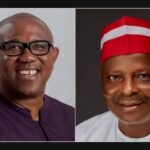
The disagreement has moved beyond a dispute over the status of a support group and is increasingly raising questions about how the NDC intends to coordinate the different political movements backing its presidential ticket without creating competing campaign structures.


At the centre of the controversy is the OK Movement’s decision to constitute a 59-member Presidential Campaign Council to mobilise support for Obi, the NDC presidential candidate, and his running mate, Kwankwaso.
The NDC subsequently distanced itself from the council, maintaining that the structure was not authorised by the party.
NDC National Leader and former Bayelsa State Governor, Senator Seriake Dickson, further questioned the development, arguing that political support groups should complement rather than compete with the political party sponsoring candidates.
Dickson maintained that support organisations have legitimate roles in grassroots mobilisation but should not establish parallel structures capable of competing with the official campaign machinery of the party.
His comments have now drawn a firm response from the OK Movement.
National Director-General of the movement, John Ozyl Ughulu, rejected attempts to classify the organisation merely as an appendage of the NDC, insisting that it is an independently organised political movement with structures extending from the national level to states, local governments and wards.
According to Ughulu, supporting Obi and Kwankwaso on the NDC platform does not automatically transfer ownership or administration of the movement’s political machinery to the party.
He maintained that political cooperation should not be interpreted as organisational subordination.
The OK Movement said it would continue to mobilise, campaign and encourage Nigerians to vote for Obi and Kwankwaso while retaining control of the structures it built independently.
Ughulu also rejected Dickson’s criticism of the movement’s decision to establish its own campaign council.
While acknowledging the constitutional authority of the NDC over its internal affairs and official campaign organisation, he argued that an independent political movement should equally have the freedom to organise its members and establish mechanisms for mobilising support for its preferred candidates.
The OK Movement stressed that it was not attempting to assume supremacy over the NDC or usurp the party’s constitutional responsibilities.
Instead, it said its position was about preserving its organisational identity and protecting structures developed through the efforts of its members and coordinators across the country.
The controversy exposes a potentially important challenge for the NDC as preparations for the 2027 election intensify.
Political parties traditionally control their official campaign organisations, candidate structures and electoral operations. Support movements, meanwhile, can provide additional mobilisation, volunteers and grassroots networks.
The dispute arises over where the boundary between those functions should be drawn.
Dickson’s position is that support groups should not compete with the political party for authority, political space or campaign supremacy.
The OK Movement’s argument is different: it says it is not merely a conventional support group and therefore should not be expected to surrender its organisational machinery simply because the candidates it supports are contesting on the NDC platform.
The distinction has become particularly significant because the coalition supporting Obi and Kwankwaso includes political networks with their own established identities.
The Obidient Movement grew around Obi’s political campaigns, while Kwankwasiyya has for years been associated with Kwankwaso’s political organisation and grassroots following.
The OK Movement says its own identity must similarly be recognised rather than automatically absorbed into the NDC structure.
Ughulu warned that the movement would resist through lawful and democratic means any attempt to appropriate, dissolve or transfer its structures without approval from its legitimate organs.
Despite the disagreement, the movement reaffirmed its political support for Obi and Kwankwaso.
That distinction means the dispute is presently less about the presidential ticket itself than about control, authority and the relationship between the party and independent organisations campaigning for its candidates.
The NDC, meanwhile, maintains that it alone has the authority to establish its official Presidential Campaign Council.
The party has said Obi and Kwankwaso would participate in selecting key officials of that council in consultation with the party leadership.
As the 2027 campaign approaches, resolving the competing interpretations could become important to avoiding duplication and conflicting instructions among campaign organisations.
For the NDC, the challenge is coordinating multiple grassroots movements without weakening the authority of its official campaign structure.
For the OK Movement, the issue is preserving the political network it says was independently built and cannot simply be transferred to another organisation.
Both sides nevertheless publicly maintain support for the same presidential ticket.
Whether that shared electoral objective produces an agreed framework for cooperation—or leaves separate organisations operating alongside the official NDC campaign machinery—will be one of the organisational questions surrounding the Obi-Kwankwaso campaign as the 2027 election draws closer.


