



Showunmi Tackles Atiku Over Fuel Subsidy Proposal, Backs Tinubu Reforms
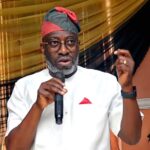
The debate over Nigeria’s fuel subsidy policy has intensified ahead of the 2027 presidential election, with Otunba Segun Showunmi rejecting former Vice President Atiku Abubakar’s proposed subsidy intervention and throwing his weight behind President Bola Tinubu’s economic direction.

Showunmi, Chief Promoter of the Alternative Movement, argued that Nigeria should not return to policies that, in his view, failed to deliver sustainable results despite decades of implementation.


Speaking in Abeokuta during a sensitisation and mobilisation programme in support of Tinubu’s re-election, Showunmi described Atiku’s subsidy proposal as a backward step, using the metaphor of taking Nigeria “back to Egypt.”
“We have tried subsidies in this country. We started it from 1973. And between 1973 and date, we have seen the result. If it had worked, wouldn’t we have seen it?” he said.
Showunmi questioned the benefits Nigeria derived from years of subsidy spending, particularly against the backdrop of challenges surrounding the country’s state-owned refineries.
His intervention comes amid an emerging policy battle over how Nigeria should reduce energy costs and ease the financial pressure on households and businesses.
Atiku, the African Democratic Congress presidential candidate for the 2027 election, has proposed government intervention aimed at lowering fuel costs. However, his camp has maintained that the proposal should not be confused with the previous subsidy system built around imported petroleum products.
Atiku’s proposed model would instead provide targeted support for domestic refining by reducing crude feedstock costs for qualifying Nigerian refineries through what his team describes as a transparent and independently verified mechanism.
Under the proposal, government support would be capped, budgeted and audited, while participating refineries would be subjected to monitoring and domestic supply obligations.
Showunmi, however, maintained that Nigeria should continue with the current economic direction rather than revisit subsidy policies.
He argued that the removal of petrol subsidy had improved revenues available to the federal, state and local governments, saying increased government receipts should eventually translate into development and improved services.
According to him, the Tinubu administration requires sufficient time to consolidate its economic policies and reforms.
“We cannot be changing leadership every four years. Democracy is very difficult, and the ability to be able to even run policy requires a bit of time,” Showunmi said.
He disclosed that he had begun grassroots mobilisation ahead of the 2027 general election, with attention being given to political organisation at polling-unit level.
Showunmi said the mobilisation exercise would extend across the six local government areas in Ogun Central as part of efforts to build support for Tinubu’s re-election campaign.
“We are not social media politicians. We are not television politicians. I am a grassroots politician through and through,” he said.
The unfolding disagreement highlights a major economic policy question likely to feature prominently in the 2027 presidential campaign: whether Nigeria should maintain the post-subsidy market structure introduced under Tinubu or adopt Atiku’s proposed targeted production-support system to reduce domestic fuel costs.
With the high cost of petrol affecting transportation, food prices and business expenses, competing approaches to energy pricing and government intervention are expected to remain central to the economic debate as political activities gather momentum ahead of 2027.


