



Nigerian Midfielder Quadri Liameed Discharged After Head Injury in Spain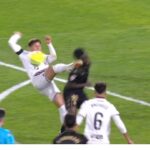
By Akin Alade

Nigerian footballer Quadri Liameed has escaped a potentially serious head injury after being knocked unconscious during a Spanish second-division encounter between CE Sabadell and Albacete, in an incident that sparked widespread concern over player safety.

The 24-year-old midfielder was rushed to hospital following a frightening collision on Saturday, October 31, 2026, but was subsequently discharged after medical examinations revealed no further complications.
The incident, which occurred during Sabadell’s 2-1 defeat to Albacete, overshadowed the outcome of the encounter as players, officials and spectators feared for the Nigerian’s safety.
Frightening Collision Leaves Nigerian Midfielder Unconscious
The unfortunate incident occurred around the 40th minute when Albacete player José Corpas attempted to volley a loose ball during an aerial challenge.
However, his swinging boot struck Liameed in the head, sending the Nigerian midfielder crashing to the ground unconscious.
The referee immediately stopped proceedings as medical personnel rushed onto the pitch to provide emergency treatment.
The frightening scenes caused considerable anxiety among players from both teams, with the injured midfielder requiring urgent medical attention before being transported to hospital by ambulance.
Corpas was subsequently shown a straight red card for the dangerous challenge, leaving Albacete with 10 players for the remainder of the encounter.
Although the collision appeared unintentional, the severity of the contact raised renewed questions about player protection during competitive football matches.
Sabadell Confirms Positive Medical Update
Relief eventually came after Sabadell confirmed that the Nigerian midfielder had regained consciousness and was responding positively to medical treatment.
Following further examinations and observation, the club announced that Liameed had been discharged from hospital after tests revealed no additional medical concerns.
The midfielder was also cleared to travel back to Sabadell with his teammates.
The encouraging development brought reassurance to supporters who had feared the consequences of the head injury.
The club expressed appreciation to the medical personnel who responded promptly to the emergency and assisted the injured player.
Despite the positive medical update, Liameed’s eventual return to competitive football will depend on appropriate medical clearance and recovery protocols.
Albacete Defeats Sabadell Despite Red Card
Meanwhile, the dramatic encounter ended in a 2-1 victory for Albacete despite the hosts playing a significant portion of the match with 10 men.
Albacete had established a two-goal advantage before Sabadell reduced the deficit in the second half.
The visitors intensified their attacking efforts in search of an equaliser, but Albacete maintained their defensive discipline to secure all three points.
However, the result became secondary to the concern surrounding Liameed’s condition following the collision.
Quadri Liameed’s Growing Influence in Spanish Football
Before the injury scare, the Nigerian midfielder had established himself as an important member of Sabadell’s squad.
The 24-year-old had featured in all 12 of the club’s league matches this season, contributing three assists.
His consistency and involvement in the team’s midfield operations have made him a valuable player as Sabadell pursue their ambitions in Spanish football.
The incident therefore represents a setback for the midfielder, whose immediate priority will be complete recovery before returning to action.
Incident Renews Debate Over Footballers’ Safety
The collision has once again highlighted the dangers associated with aerial challenges and accidental head contact in professional football.
Head injuries remain a major concern in modern football, particularly when players lose consciousness following collisions.
Medical experts generally recommend careful assessment and a gradual return-to-play process after suspected concussions, even where initial hospital examinations show no serious structural injury.
The immediate intervention of medical personnel during the encounter demonstrated the importance of having emergency response systems available at professional sporting events.
For Nigerian football followers, the most encouraging development is that Liameed survived the frightening incident and received medical clearance to leave hospital.
His recovery will remain the priority as he looks forward to continuing his football career in Spain.
The incident serves as another reminder that beyond victories, defeats and individual performances, the health and safety of footballers must remain central to the development of the game.


