



By Imo’s First Robotic-Assisted Surgery Signals New Era for Nigeria’s Healthcare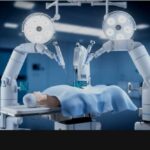 Alade
Alade
Nigeria’s healthcare sector may be gradually entering a new era of technology-driven medicine following the successful completion of the first robotic-assisted surgery in Imo State, a development that could strengthen confidence in the country’s capacity to provide sophisticated medical procedures locally and ultimately reduce the number of Nigerians travelling abroad for treatment.

The landmark procedure was carried out at the Imo Robotics and Oncology Centre (IROC), located within the Imo Specialist Hospital Complex in Umuguma, Owerri. According to reports, the operation was led by Professor Kingsley Ekwueme, a United Kingdom-based consultant robotic and laparoscopic surgeon, working alongside a team of Nigerian and international medical specialists.

The successful surgery is particularly significant because it demonstrates what is possible when Nigeria combines its pool of medical professionals with modern technology, sustained investment, specialist training and effective management.
For decades, one of the paradoxes confronting Nigeria has been the presence of highly trained Nigerian doctors and other healthcare professionals working both at home and across some of the world’s leading health systems, while many Nigerians with sufficient financial resources continue to travel abroad for specialised medical treatment.
The development in Imo State therefore offers a glimpse of how that narrative could begin to change.
From Medical Tourism to Medical Confidence
Medical tourism has remained a major concern in Nigeria, particularly as patients travel overseas for complex procedures, cancer treatment, organ-related interventions and other specialised services.
But the establishment of centres capable of delivering advanced procedures such as robotic-assisted surgery could gradually give Nigerians greater confidence in obtaining sophisticated treatment within the country.
Robotic-assisted surgery allows appropriately trained surgeons to perform certain complex operations with enhanced precision and control. In the Imo procedure, Professor Ekwueme highlighted its potential benefits particularly in the treatment of localised prostate cancer, where precision can be important in removing cancerous tissue while seeking to preserve important bodily functions.
The implication goes beyond one successful operation. If Nigeria can develop more centres equipped with modern medical technologies and, importantly, train enough local specialists to operate and maintain them, the country could retain more patients who might otherwise seek treatment overseas.
It could also create opportunities for Nigeria to become a destination for specialised healthcare services for patients from neighbouring African countries.
Uzodimma’s Healthcare Investment Sets New Benchmark
Governor Hope Uzodimma, who witnessed the landmark procedure, described the development as part of efforts to make quality specialised healthcare more accessible and affordable.
The governor emphasised that the success of the project should ultimately be measured not merely by the sophistication of the equipment installed but by patients treated, specialists developed, skills transferred and public confidence built in the local healthcare system.
That approach could prove critical.
Nigeria does not simply need expensive medical equipment. It needs the expertise to operate such technology, engineers and technicians capable of maintaining it, sustainable financing systems, trained medical personnel and institutions that can keep the facilities functioning long after their commissioning.
Imo’s robotic surgery project appears to recognise that challenge. The state had earlier entered into a partnership aimed at establishing robotic surgical capacity, with plans centred on combining technology with professional expertise and training.
The centre also operates through a public-private partnership model, with the private sector providing the majority of the funding, according to the state government.
A Bigger Opportunity for Nigeria
The Imo breakthrough should therefore not be viewed merely as an achievement for one state. It should encourage governments, teaching hospitals, private investors, universities and healthcare professionals across Nigeria to reconsider what the country’s health system can achieve.
Nigeria has produced medical professionals who have distinguished themselves internationally. The bigger challenge is creating an environment at home where their knowledge, experience and expertise can flourish.
There is also growing evidence of investment in healthcare infrastructure in Imo. In June 2026, the Federal Government and Imo State signed an agreement for the takeover and upgrade of General Hospital, Okigwe, into a Federal Medical Centre, aimed at expanding access to specialist healthcare services.
If similar investments are replicated nationally and supported by reliable electricity, modern laboratories, well-equipped hospitals, competitive remuneration, research funding and continuous professional development, Nigeria could begin reversing the long-standing movement of both patients and medical talent overseas.
Bringing Nigerian Medical Expertise Back Home
Another important lesson from the Imo operation is the involvement of Professor Ekwueme, a Nigerian specialist practising in the United Kingdom.
Nigeria’s large community of healthcare professionals abroad represents an enormous reservoir of expertise.
Rather than viewing the medical brain drain exclusively as a permanent loss, governments and healthcare institutions can develop programmes that allow Nigerian specialists overseas to participate in surgeries, training, research, mentorship and technology transfer at home.
Such collaborations can help develop the next generation of Nigerian specialists capable of independently performing highly technical procedures.
The objective should ultimately be to ensure that world-class expertise becomes embedded within Nigerian hospitals rather than depending indefinitely on visiting specialists.
The Beginning, Not the Destination
One successful robotic-assisted surgery cannot by itself resolve the enormous challenges confronting Nigeria’s healthcare system. Many hospitals still require better equipment, staffing, medicines, electricity, emergency services and funding.
However, major transformations often begin with milestones that demonstrate what is achievable.
Imo State’s successful robotic-assisted surgery provides one such moment.
The task before Nigeria is to build upon it.
Government at all levels must continue investing in primary, secondary and tertiary healthcare while creating an enabling environment for credible private-sector participation. Medical education must receive greater attention, while Nigerian specialists in the diaspora should be encouraged to transfer knowledge and expertise home.
More importantly, advanced healthcare must not become something accessible only to wealthy citizens. Health insurance and other sustainable financing mechanisms must expand so that ordinary Nigerians can benefit from technological progress.
If Nigeria succeeds in combining its human capital with modern medical infrastructure and sustainable healthcare financing, the country could gradually move from being a major source of outbound medical tourism to becoming an important destination for quality healthcare in Africa.
The successful robotic-assisted surgery in Imo State is therefore more than a medical achievement. It is a powerful indication that Nigeria can build a healthcare system capable of treating its citizens at home, retaining its medical talent and eventually attracting patients from beyond its borders.
For a nation that has watched many of its citizens travel thousands of kilometres in search of specialised treatment, the message from Owerri is encouraging: the future of advanced healthcare can also be built here in Nigeria.


