



Edo State Governor, Monday Okpebholo, has condemned former President Goodluck Jonathan’s criticism of President Bola Tinubu’s declaration of a state of emergency in Rivers State, calling the move a necessary and decisive step. Okpebholo, speaking at the launch of the 125-kilometre Benin-Auchi road project, argued that Jonathan’s previous lack of action during critical moments made his criticism of Tinubu’s decision unfounded.
“The man criticizing President Tinubu did not take similar action when the Chibok girls were kidnapped in 2014. It’s better for a President to be proactive. The decision by President Tinubu saved Nigeria’s economy,” Okpebholo said, comparing the current administration’s swift intervention to Jonathan’s failure to act during the 2014 Chibok abduction.
He also pointed out that the state of emergency was necessary for the peace and security of the Niger Delta. “When crude oil pipelines in Rivers were being blown up by militants, what did Nigerians expect the President to do? The declaration of a state of emergency is in the best interest of Nigerians,” Okpebholo added, reaffirming his support for the President’s actions.
This marks the second time in just a few days that Okpebholo has defended President Tinubu’s move, distancing himself from the South-South Governors Caucus’s condemnation of the declaration.


Meanwhile, Information and National Orientation Minister Mohammed Idris defended the President’s action, describing it as a “painful but responsible” decision. Idris emphasized that the declaration, though difficult, was necessary to restore order and ensure governance in the state, which had effectively collapsed due to political turmoil.
“The President had no choice but to act. His decision was made in the best interest of Rivers and Nigeria as a whole,” Idris stated, reinforcing that the action was in line with constitutional provisions and aimed at preventing further instability.
Presidential spokesperson Bayo Onanuga also weighed in, underscoring the critical nature of the intervention. Onanuga stated that without the declaration of emergency, the political crisis in Rivers could have escalated into violence, potentially devastating the state’s oil infrastructure and severely affecting the country’s oil production.
Fubara Returns to Public Eye After Suspension
In the midst of ongoing tensions, Rivers State Governor Siminalayi Fubara made his first public appearance after his suspension by President Tinubu. Fubara attended a special prayer service at the Salvation Ministry in Port Harcourt, where he was received by the church’s senior pastor and participated in a worship and thanksgiving session.
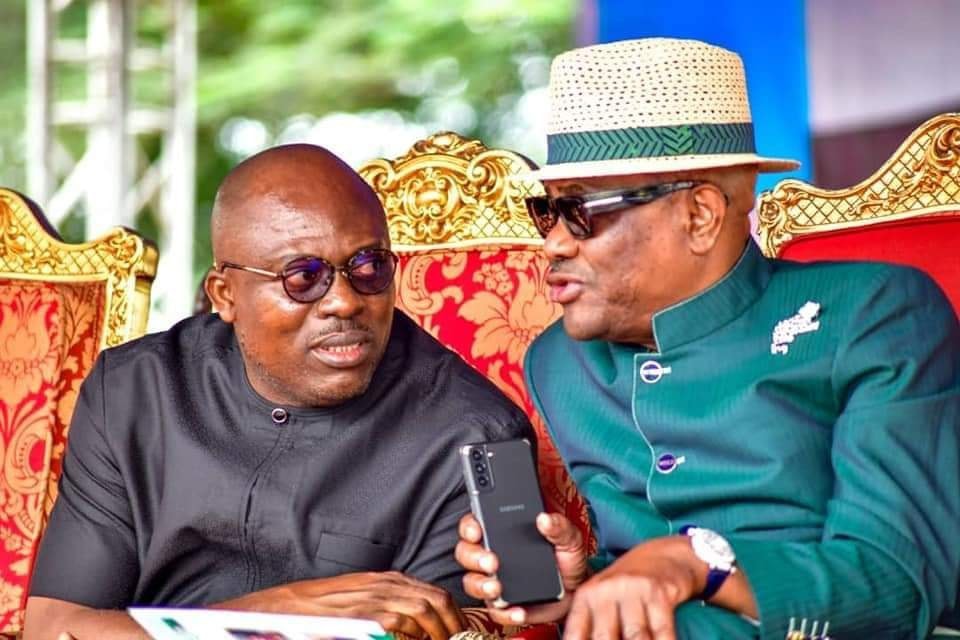
Accompanied by key political figures and state leaders, Fubara expressed gratitude for divine intervention amid the political challenges facing his administration. Despite the ongoing crisis, Fubara refrained from making any public comments following the service, and no further statements were made regarding his future actions.
As the situation in Rivers State continues to develop, the political rift between the governor and President Tinubu persists, with many speculating about the long-term impact of the state of emergency and its effect on the state’s governance.


