

2027: Tension in Abuja as Security Forces Block Obi-Kwankwaso Supporters’ Mega Rally


2027: Tension in Abuja as Security Forces Block Obi-Kwankwaso Supporters’ Mega Rally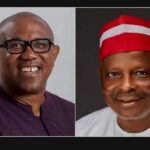
By Akin Alade


Political tension heightened in Abuja on Saturday as heavily armed security operatives, military vehicles and armoured tanks were deployed around the Federal Capital Territory’s City Gate, disrupting a planned mega rally organised by supporters of Peter Obi and Senator Rabiu Musa Kwankwaso ahead of the 2027 presidential election.
The development has raised fresh concerns over political freedom, peaceful assembly and the growing rivalry between the ruling All Progressives Congress (APC) and opposition political forces seeking to challenge President Bola Ahmed Tinubu’s administration in the forthcoming general elections.
The planned rally, organised by a coalition of support groups backing Obi, the presidential candidate of the Nigeria Democratic Congress (NDC), and his running mate, Kwankwaso, was scheduled to commence at 8 a.m. at the Abuja City Gate. However, the massive deployment of security personnel reportedly prevented supporters from converging at the designated venue.
Security agencies involved in the operation included the Nigerian Army, Nigeria Police Force, Department of State Services (DSS), Nigeria Security and Civil Defence Corps (NSCDC) and members of the Civilian Joint Task Force. Armed personnel were stationed around the strategic location, while security vehicles and barricades restricted movement and access to the proposed gathering point.
One of the rally organisers, Saint Samson, expressed disappointment over the development, alleging that security operatives also prevented supporters from assembling at Unity Fountain. He maintained that the gathering was intended to mobilise political support for the opposition candidates rather than provoke confrontation with the government.
According to Samson, the organisers had no intention of engaging in violence or creating a breakdown of law and order. He explained that supporters were considering alternative arrangements to avoid confrontation with security personnel, insisting that their activities were consistent with the constitutional rights of Nigerians to participate in peaceful political gatherings.
The deployment has nevertheless generated differing interpretations. While some observers view the heavy security presence as a precautionary measure to maintain public order, others question whether such extensive military and security arrangements were necessary for a political gathering whose organisers had publicly declared peaceful intentions.
Reacting to the controversy, the Special Assistant to President Tinubu on Social Media, Dada Olusegun, reportedly explained that the security deployment was connected to arrangements for the President’s movement. He maintained that such measures were standard security procedures and should not automatically be interpreted as an attempt to suppress opposition political activities.
The incident comes amid growing political mobilisation ahead of the 2027 presidential election, with opposition groups intensifying efforts to build alliances, expand grassroots support and present themselves as alternatives to the ruling party. The Obi-Kwankwaso political partnership has become a major focus of opposition activities, particularly among supporters seeking a stronger electoral challenge to the APC.
Beyond the immediate disruption of the Abuja rally, the controversy has brought renewed attention to the constitutional balance between maintaining national security and protecting citizens’ rights to freedom of expression, association and peaceful assembly. Political analysts believe the manner in which security agencies manage campaign activities could influence public confidence in the fairness of the electoral environment.
As Nigeria moves closer to the 2027 general elections, the events at Abuja City Gate underscore the importance of political tolerance, professionalism among security agencies and equal protection of democratic rights. Whether the deployment was primarily a routine security arrangement or an excessive response to opposition mobilisation remains a subject of public debate, but the controversy has already added another dimension to the country’s unfolding presidential contest.


